
✨ AIを使って記事を要約する


Choosing a commercial music licensing platform means checking more than price. You need to confirm who the license covers (you, your client, or both), whether tracks are Content ID-cleared, and what happens to your rights if you cancel. This guide compares eight platforms across pricing models, commercial coverage, broadcast rights, and post-cancellation risk, so freelance editors, agencies, and small businesses can pick the right fit for client work, ads, and monetized content.
You licensed a track for a client’s YouTube ad. Three weeks later, the video gets a Content ID claim. The client calls. You scramble to find your receipt, upload proof, and wait for a manual review. Meanwhile, the ad is muted or demonetized.
This happens constantly. YouTube processed over 2.2 billion Content ID claims in 2024 alone, and the vast majority go unchallenged. For freelance editors and agencies delivering commercial content, a single claim can erode client trust fast.
The root cause is usually the same: the license didn’t actually cover the use case. Practitioners on Reddit’s r/editors frequently point out that “royalty-free” doesn’t automatically mean “safe for client work.” The consensus in those threads is blunt: always check whether the license covers 誰が 音楽を使用しているだけでなく、 何 それは何のために使われているのか。.
This guide compares eight commercial music licensing platforms by what actually matters for business buyers: pricing model, commercial rights scope, Content ID handling, and the question most listicles skip entirely, what happens to your license when you stop paying.
Content ID の承認を受けた楽曲を閲覧する for your next commercial project.
A platform qualifies as commercial-ready when its license explicitly covers four things:
The critical detail most articles miss is the “who” question. A license that covers your YouTube channel doesn’t necessarily cover your client’s channel, your freelance editor’s timeline, or the agency that hired you. As one practitioner blog for agencies put it, “Ambiguous coverage is the single most common source of post-signing disputes.”
There’s also a platform-specific trap worth knowing: TikTok explicitly prohibits businesses from using its general music library for commercial content. You need tracks from its Commercial Music Library or your own licensed music. For a deeper breakdown of how music licensing works, that guide covers the fundamentals.
| プラットフォーム | 価格設定モデル | Commercial Starting Price | Broadcast/App Rights | Content ID Handling | Post-Cancellation Rights | 最適な用途 |
|---|---|---|---|---|---|---|
| フォクシミュージック | Pay-once, lifetime | $29/track | Extended license from $150/track | Cleared (in-house catalog) | Perpetual, no renewal needed | Freelancers and agencies needing permanent rights |
| プレミアムビート | Per-track | $59/track (Standard) | $199+ per track (Premium) | Generally cleared | Perpetual per purchase | Brands wanting a trusted name |
| ミュージックベッド | Per-track + subscription | $59.99/track | Custom quote for broadcast | トラックによって異なります | Perpetual per purchase | Wedding and commercial filmmakers |
| マーモセット | Per-track, tiered | $315/track (small biz) | Included in commercial tiers | 様々 | Perpetual per purchase | Agencies with mid-size brand clients |
| エピデミック・サウンド | サブスクリプション | ~$9.99/mo (personal) | Higher-tier plans | Platform-managed whitelisting | Limited, new content not covered | High-volume weekly publishers |
| ベンサウンド | Freemium + paid | Free (with attribution) | Paid tiers | 様々 | Depends on license type | Budget-conscious beginners |
| チューンタンク | Free + commercial upgrades | Free (personal use) | Paid commercial licenses | 様々 | Depends on license type | Occasional free track needs |
| YouTubeクリエイターミュージック | Per-track or rev-share | $9.99-$74.99/track | YouTube only | Platform-native | YouTube-only, terms may change | YouTube-exclusive creators |
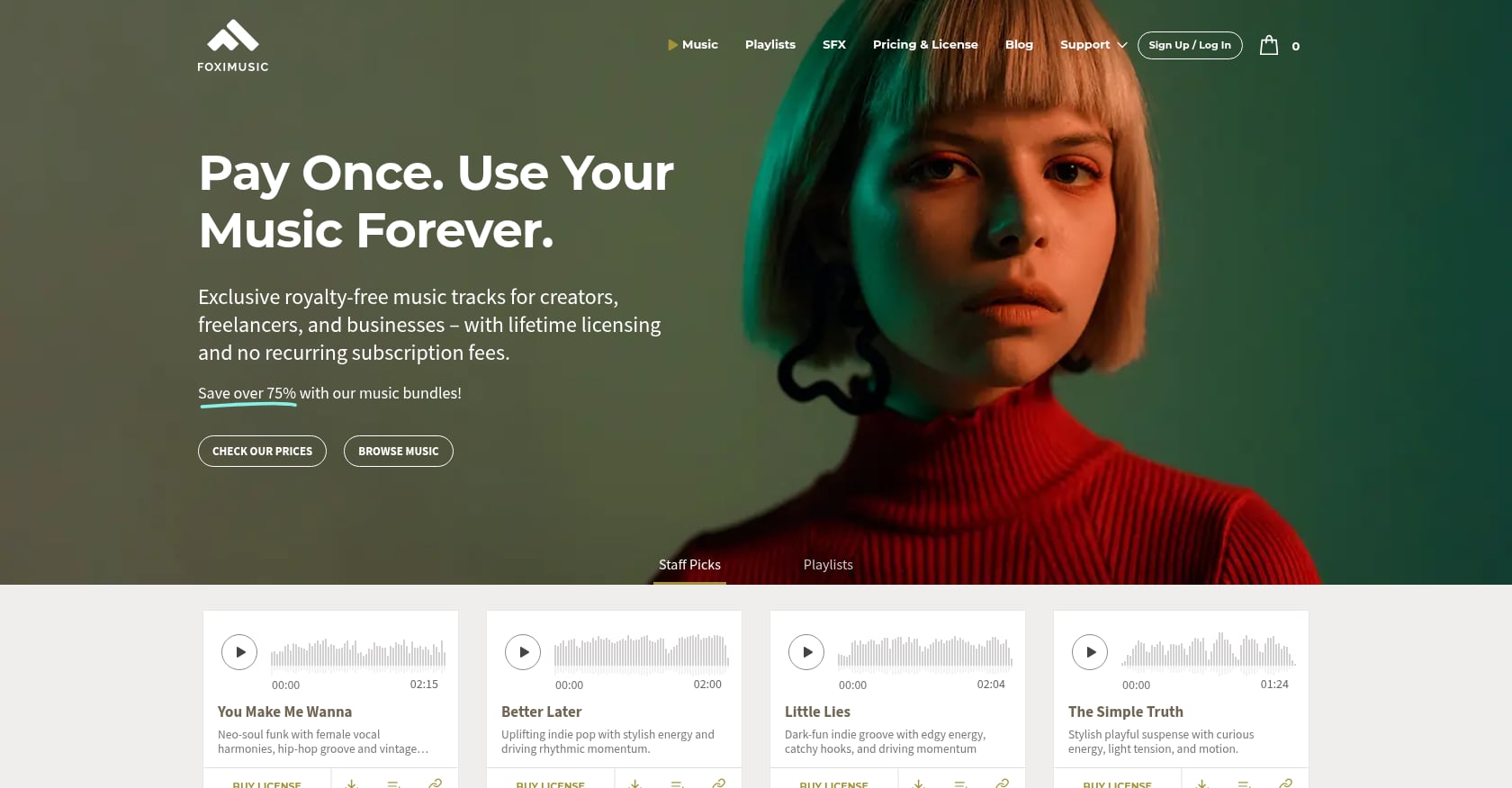
最高だ: Freelance video editors, agencies, and small businesses that need 3 to 25 tracks per year with permanent commercial rights and zero subscription overhead.
価格設定:
主な特徴:
トレードオフ:
Real user perspective: In Reddit’s r/VideoEditing, users seeking lifetime pay-per-track alternatives have mentioned Foximusic as an option that sidesteps recurring fees. The platform carries a positive aggregate rating on G2, though from a smaller review base.
Why it stands out for commercial buyers: The combination of lifetime rights, in-house ownership, and transparent bundle pricing solves the three biggest pain points commercial buyers face: subscription fatigue, Content ID claims, and unclear post-cancellation terms. The extended license at $150 per track is notably lower than the $199 to $999 per-track range that other platforms charge for comparable broadcast and app coverage.
Explore licensing plans and bundles to see current pricing.
最高だ: Brands and agencies that prioritize a well-known name backed by Shutterstock’s infrastructure and don’t mind paying premium per-track prices.
価格設定:
主な特徴:
トレードオフ:
Real user perspective: G2 rates PremiumBeat 4.3 out of 5 from 12 reviews, with users praising quality, genre range, and navigation. Reddit discussions echo this, though some editors note the catalog can lean too “corporate” for certain creative projects.
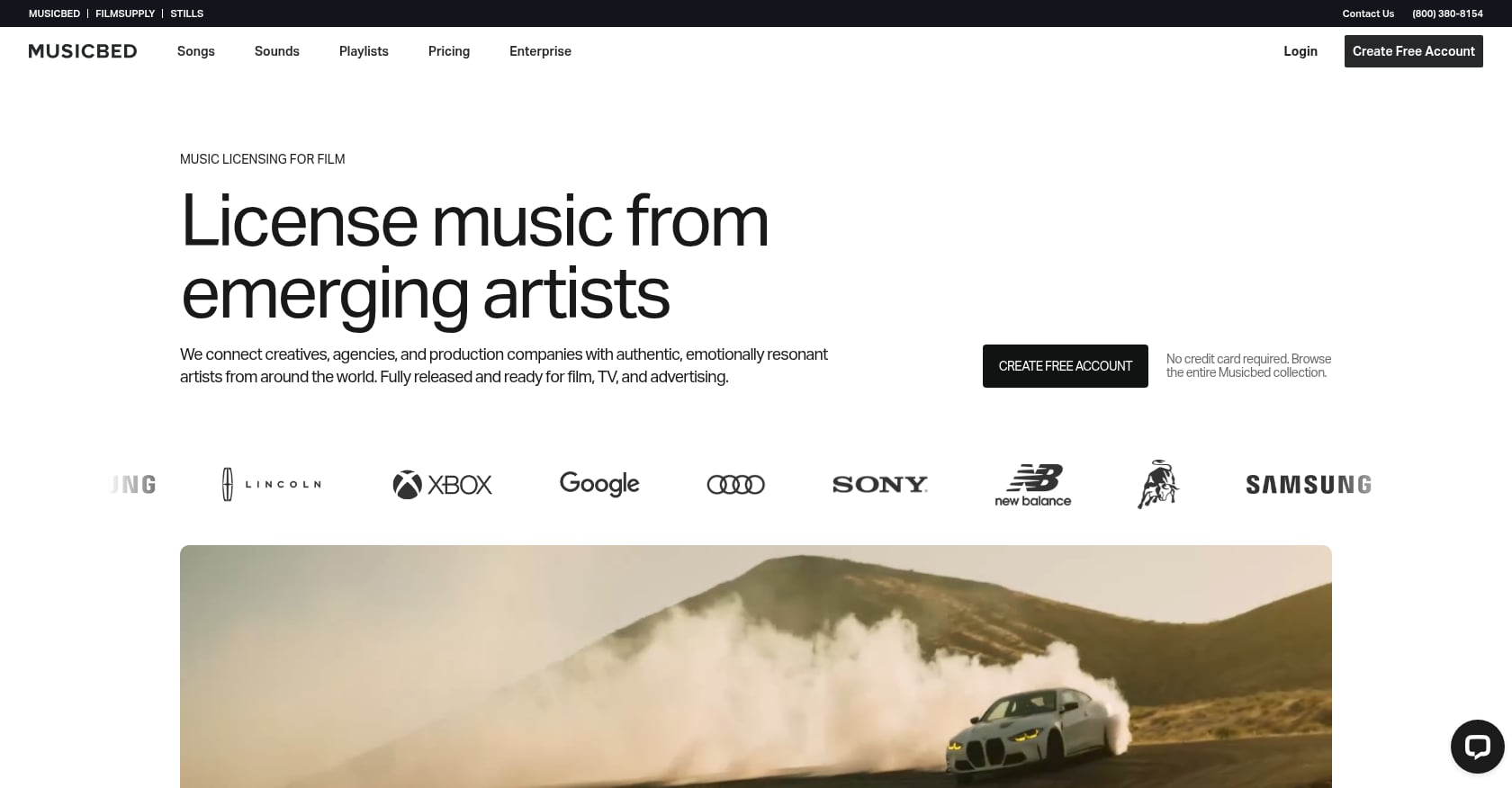
最高だ: Commercial filmmakers, wedding videographers, and documentary producers who want curated, high-production-quality music and are willing to navigate tiered pricing.
価格設定:
主な特徴:
トレードオフ:
Real user perspective: Musicbed reviews every submission and rejects music that doesn’t meet production standards. This selectivity means fewer tracks but consistently high quality. Their core audience skews toward wedding filmmakers, documentary producers, and brand agencies.
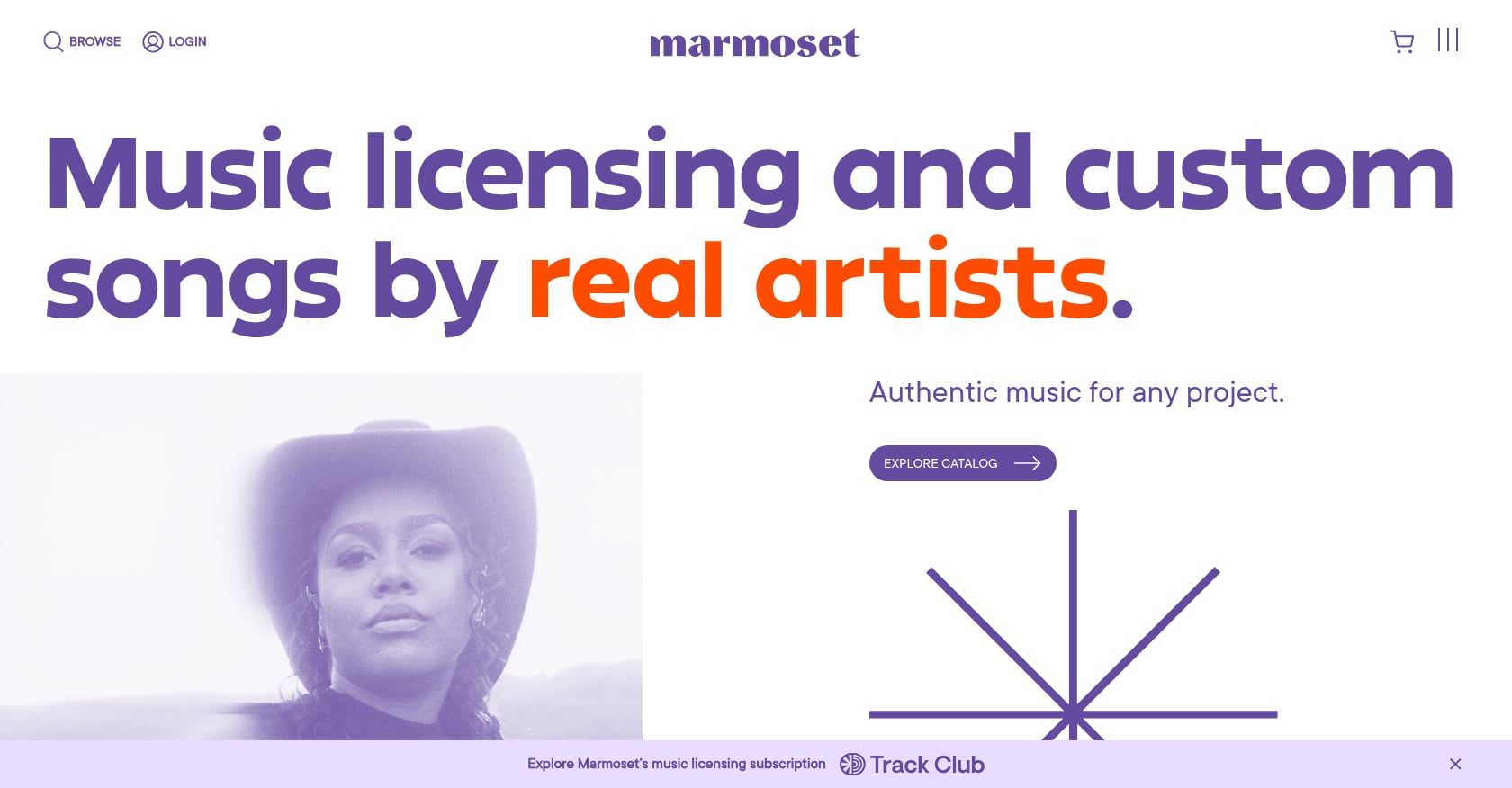
最高だ: Agencies handling brand campaigns for mid-size clients who need curated, distinctive music and can absorb higher per-track costs.
価格設定:
主な特徴:
トレードオフ:
最高だ: High-volume social media creators publishing weekly or more who need a constant stream of fresh music and sound effects.
価格設定:
主な特徴:
トレードオフ:
Real user perspective: Reddit sentiment on Epidemic Sound is genuinely mixed. Creators praise music quality and the SFX library, but complaint threads surface regularly about copyright claims appearing despite active subscriptions, renewal pricing confusion, and uncertainty about whether a client’s channel stays covered after cancellation. This is the core tension between subscriptions and one-time licenses for commercial buyers.
最高だ: Budget-conscious creators just starting out who may upgrade to paid commercial licenses as their business grows.
価格設定:
主な特徴:
トレードオフ:
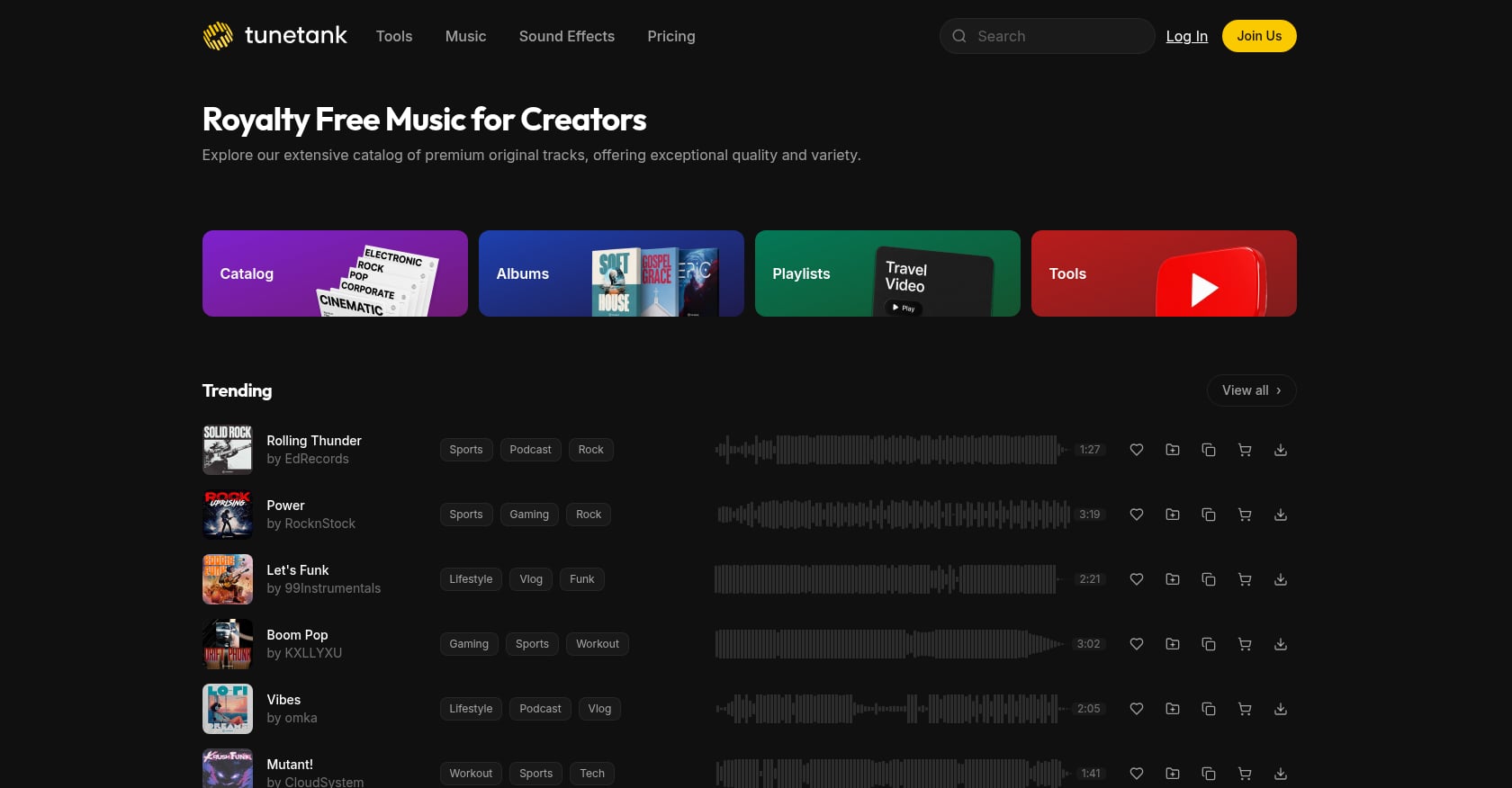
最高だ: Creators who need occasional free tracks for personal projects with the option to upgrade for commercial use.
価格設定:
主な特徴:
トレードオフ:
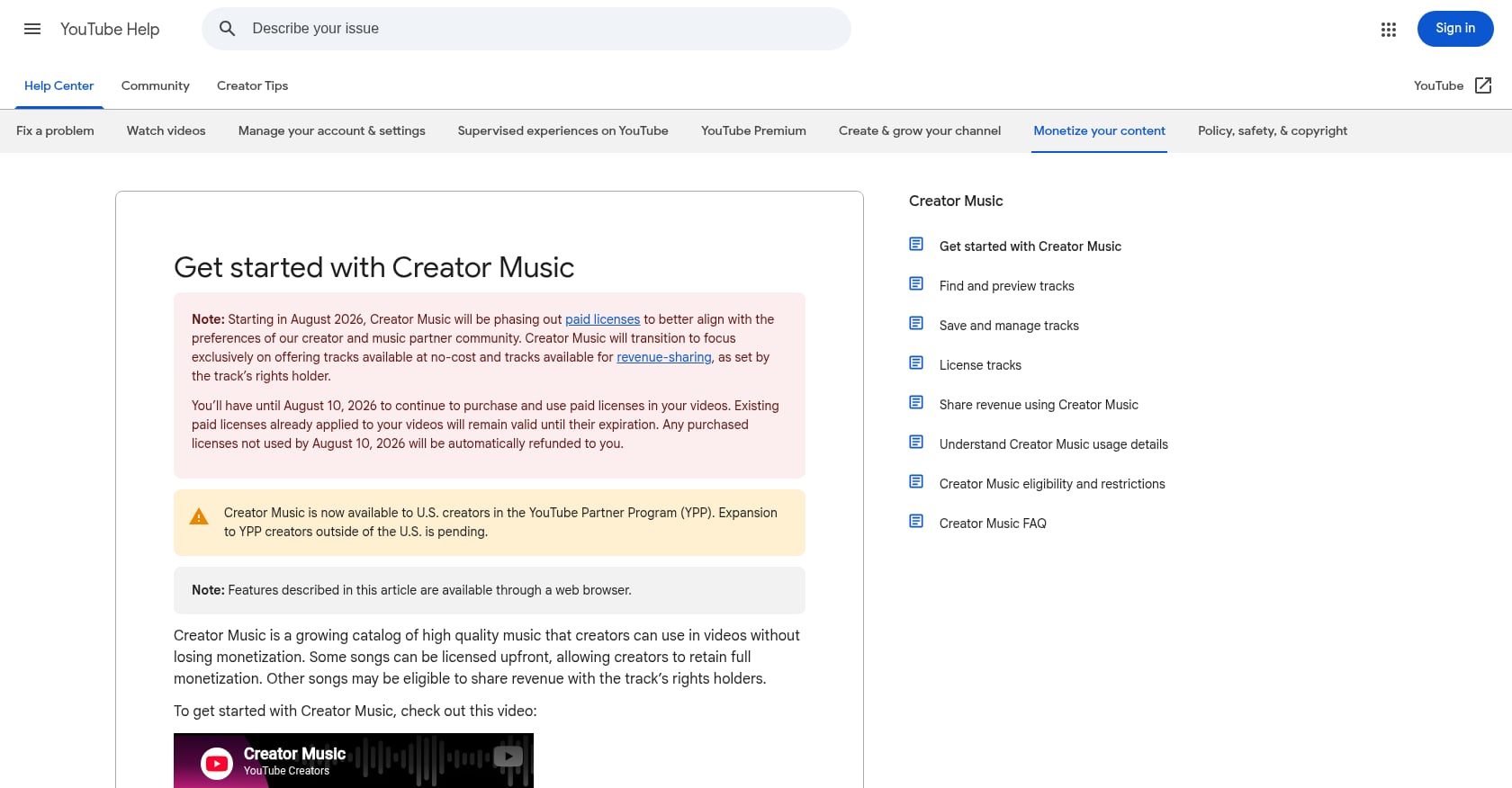
最高だ: YouTube-exclusive creators who want popular, recognizable music with platform-native clearance and are comfortable with single-platform restrictions.
価格設定:
主な特徴:
トレードオフ:
For a broader comparison of royalty-free music platforms, that breakdown includes additional pricing details across platforms.
The subscription vs. pay-once question isn’t philosophical. It’s arithmetic.
Consider a freelance editor who needs 10 tracks per year for client projects over three years. Here’s a simplified comparison:
サブスクリプションモデル (~$15/month commercial tier): $180/year, $540 over three years. Post-cancellation, any new content using those tracks is unprotected. Old content may stay cleared on some platforms, but new uploads won’t be.
Pay-once model (Foximusic 10-track Commercial bundle): $99 one time. Perpetual rights. No renewal. Use the tracks in new projects five years from now without concern.
That’s $99 vs. $540 for the same number of tracks, with the pay-once model carrying zero cancellation risk.
The subscription fatigue is real and measurable. C+R Research found that consumers estimated spending $86 per month on subscriptions but were actually paying $219 after itemizing. Forty-two percent had forgotten they were still paying for a service they no longer used. Music licensing subscriptions are no exception.
Practitioners on Reddit regularly express frustration that “everything seems to have moved to subscription.” Multiple threads echo the same theme: creators who only need 3 to 10 tracks per year feel they’re overpaying with monthly plans.
That said, subscriptions make sense in one scenario: if you’re publishing 20+ videos per month and consistently need fresh music and sound effects. For everyone else, especially commercial buyers who need long-term rights without monthly fees, the per-track model wins on total cost of ownership.
Content ID is YouTube’s automated system for scanning uploaded videos against a database of copyrighted audio and video. When it finds a match, it triggers a claim, which can mute your video, redirect ad revenue, or block the content entirely.
For commercial buyers, this isn’t a minor annoyance. It’s a business risk. Imagine delivering a finished ad to a client, only to have it claimed within hours of upload.
Here’s what matters when evaluating a commercial music licensing platform’s Content ID handling:
Does the platform own its catalog? If a platform aggregates music from third-party artists, those artists (or their distributors) can register tracks with Content ID independently. This creates “legitimate” claims on music you legitimately licensed. Platforms that own 100% of their catalog can control Content ID registration directly, minimizing false claims.
How are disputes resolved? Some platforms offer automatic whitelisting. Others give you a PDF license certificate to upload manually during the dispute process. Manual disputes work, but they take time, and YouTube provides no guaranteed timeline.
Are “royalty-free” and “copyright-free” the same? No. In one Reddit r/NewTubers thread, creators shared experiences with tracks labeled “copyright-free” that later triggered claims. One user reported that even well-known Creative Commons tracks had been claimed by entities other than the original creator. For more on how Content ID works for monetized channels, that guide covers the technical details.
The stakes are significant. Under U.S. copyright law, statutory damages for infringement range from $750 to $30,000 per work, and willful infringement can push penalties to $150,000 per work.
Instead of picking the “best” platform in the abstract, match the platform to your actual workflow:
You publish 20+ videos per month and need constant fresh music.
A subscription platform with a large, regularly updated catalog is probably worth the ongoing cost. Just verify what happens to your existing content if you ever cancel.
You license 3 to 25 tracks per year for client work.
A pay-once, lifetime license model eliminates subscription overhead and guarantees perpetual rights. Bundle pricing can bring per-track costs below $6.
You need broadcast, app, or game rights.
Check extended license pricing carefully. The range across platforms is enormous: $150 to $999+ per track for similar coverage. Some platforms require custom quotes, which adds delays to client timelines. For broadcast-specific licensing, this guide on TV music without PRO headaches walks through the details.
You’re an agency managing multiple clients.
Verify that the license covers your client, not just your company. Ask specifically: Does the license transfer to the end client? Does it cover their channels? Can your subcontractors use the music in their editing software? These “who is covered” questions prevent the post-signing disputes that agencies dread.
You create content for TikTok, Instagram, or Facebook ads.
Confirm the license covers commercial use on those specific platforms. TikTok’s rules for business accounts are different from personal accounts, and Instagram’s music library is for personal posts, not branded ad content.
The global stock music market sits at $1.76 billion in 2026 and is projected to reach $3.72 billion by 2034, growing at a 9.8% CAGR according to Straits Research. Growing demand from digital content creators and social media platforms drives roughly 38% of that growth.
Stock music usage in video content has increased 30% over the past five years. Yet a 2024 survey found that 74% of creators still don’t fully understand how music licensing works. That gap between usage and understanding is exactly where commercial buyers get burned, choosing a platform based on price alone and discovering too late that their license didn’t cover client delivery, broadcast, or multi-platform distribution.
Global synchronization revenues (music licensed for use in visual media) totaled $641 million in 2025, part of a recorded music industry that reached $31.7 billion and its eleventh consecutive year of growth. The money flowing into licensed music is significant, and so is the legal infrastructure protecting rights holders. Picking the right commercial music licensing platform isn’t optional for anyone doing this professionally.
Royalty-free means you pay once and don’t owe per-use royalties afterward. But it doesn’t automatically mean the license covers commercial use. A royalty-free track with a personal license can’t legally be used in client work, ads, or monetized content. Always verify that the specific license tier covers commercial applications. For a full explanation, see this 音楽ライセンスガイド.
It depends on the platform. Some allow content published during your active subscription to remain cleared, but any new content using those tracks after cancellation won’t be covered and can receive copyright claims. Pay-once lifetime licenses avoid this issue entirely since there’s nothing to cancel.
It can. Even properly licensed tracks sometimes trigger claims if the music was registered in YouTube’s Content ID system by the rights holder or a distributor. Platforms that own their catalog in-house can control this more effectively. Having an instant license certificate helps resolve disputes when they occur.
Prices range widely. Per-track commercial licenses start around $29 on some platforms and can exceed $999 for broadcast-level rights on others. Subscription models run from roughly $10 to $50+ per month depending on commercial tier. The right question isn’t just “how much per track” but “what’s the total cost over 2 to 3 years including renewal risk?” This cost breakdown by use case covers the full range.
Usually not without a separate license for each project, though terms vary by platform. Some platforms grant a single-use license per purchase, while others cover unlimited projects under one license. Always read the specific terms, because “unlimited use” on one platform might mean something different than on another.
Many commercial licenses cover all digital platforms under a single purchase, but not all do. YouTube Creator Music, for example, only covers YouTube. TikTok requires businesses to use its Commercial Music Library or bring their own licensed tracks. Check multi-platform coverage before purchasing.
Under U.S. copyright law, statutory damages range from $750 to $30,000 per work for standard infringement. Willful infringement can push penalties to $150,000 per work. Beyond legal exposure, platforms can mute, demonetize, or remove your content entirely.
If your project will appear on TV, radio, streaming platforms like Netflix or Hulu, or inside an app or game, you need extended or broadcast rights. Using a standard digital license for broadcast is a violation, regardless of whether anyone notices immediately. Extended licenses from different platforms range from $150 to $999+ per track, so comparing this tier specifically can save significant money.
Need music for client work that won’t trigger claims or expire when a subscription lapses? Every track in Foximusic’s catalog is Content ID-cleared, commercially licensed, and covered by a single lifetime payment.
Browse the full catalog or start with curated playlists to find something that fits your project.
無料のビデオプロンプト生成ツールを使えば、すぐに本番環境で使用できるテキストからビデオへのプロンプトを生成し、プロレベルの結果を得ることができます。.








 English English
  Spanish
 French
 Italian
 German
 Portuguese
 Chinese
 Japanese
 Hebrew