✨ Summarize article with AI

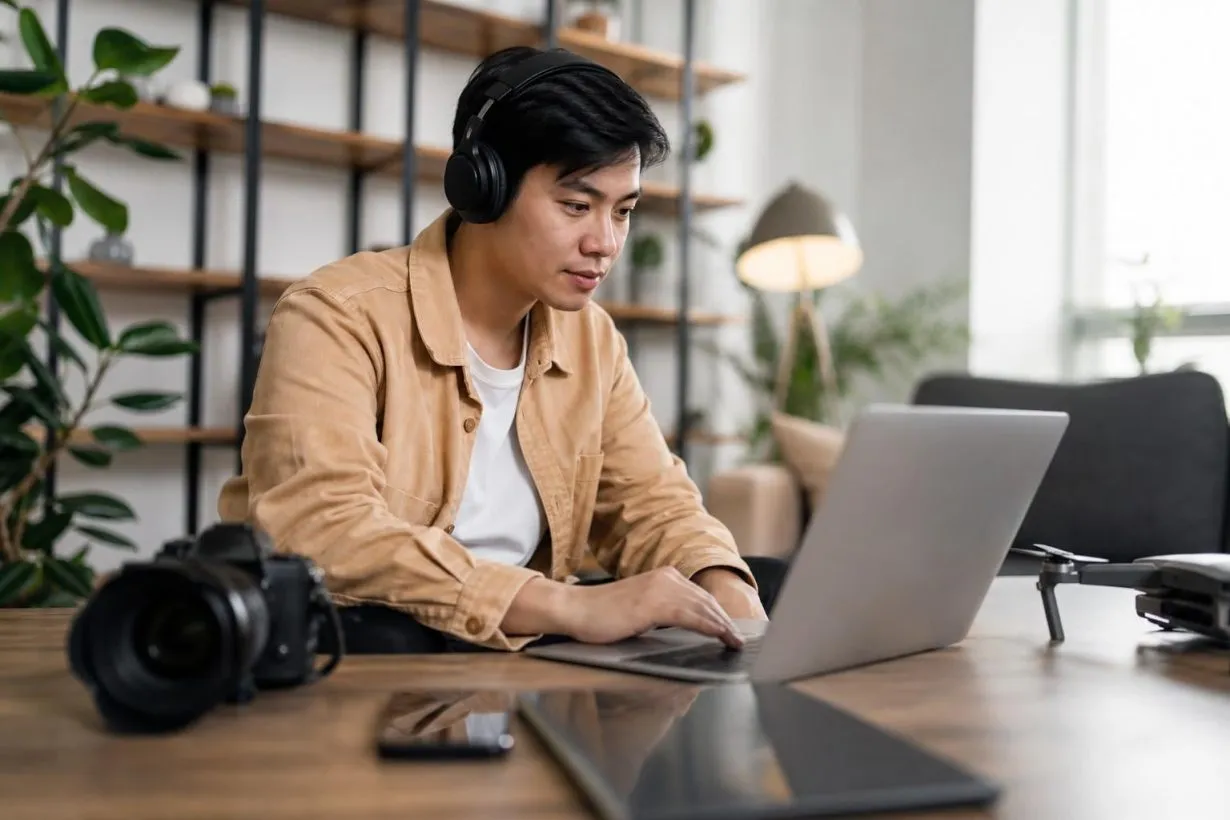
YouTube Shorts music licensing depends on three things: where the music came from, how you added it, and what the Short is for. Music picked inside YouTube’s Shorts Audio Library through YouTube’s tools is treated differently from music you add in CapCut or Premiere. For monetized channels, client work, ads, or cross-platform posting, a separate commercial royalty-free license with documentation is the safer path. This guide breaks down every rule, term, and workflow so you can stop guessing.
Who this is for: YouTube Shorts creators who edit in CapCut, Premiere, Canva, or the YouTube app and want to avoid copyright claims, blocked uploads, and lost monetization.
How this was researched: Official YouTube documentation checked on August 27, 2026, plus current creator community discussions on Reddit and LinkedIn.
Why this exists: Because the same song can be safe in one workflow and a problem in another, and most guides don’t explain why.
YouTube Shorts music licensing is the set of permissions that allows you to use music in a YouTube Short. Those permissions might come from YouTube’s in-app Shorts Audio Library, YouTube’s royalty-free Audio Library in Studio, music you own outright, or a separate commercial license you purchased.
The important thing to understand: licensing is about permission, not popularity. A song being trendy doesn’t make it legal for your use. A song being short doesn’t either. The license follows the permission source, not the vibe.
YouTube’s rights-holder documentation confirms that Shorts Audio Library music comes from record label partners with Shorts-specific licensing agreements. That’s a narrow, platform-tied permission, not a blanket copyright clearance.
For a broader understanding of how music licensing works across video projects, this guide to music licensing for content creators covers the fundamentals.
If you need music with commercial rights you can actually document, browse Foximusic’s catalog for Content ID-cleared tracks with lifetime licenses.
Most articles say “YouTube music library” without specifying which one. There are three distinct systems, and mixing them up is where problems start.
This is the music catalog available inside YouTube’s Shorts creation flow. It includes popular, licensed tracks from label partners. When you select a song here and add it through YouTube’s tools, YouTube creates a special Content ID claim that you won’t see and can’t dispute. That claim is part of the licensing arrangement, not a punishment.
The catch: this permission is tied to YouTube’s tools. It is not a portable license you can take to CapCut, Premiere, or another platform.
A separate library inside YouTube Studio containing royalty-free production music and sound effects. YouTube describes it as copyright-safe and says tracks downloaded from it won’t be claimed through Content ID. You can use these in monetized videos if you’re in the YouTube Partner Program. Some tracks require attribution.
A YouTube Studio feature for licensing or revenue-sharing music in long-form videos. YouTube explicitly states that Creator Music tracks are for long-form videos, not Shorts or live streams. Don’t use it for Shorts.
| Music system | Works for Shorts? | Key limitation |
|---|---|---|
| Shorts Audio Library | Yes, through YouTube tools | Not portable outside YouTube’s creation flow |
| YouTube Audio Library | Yes | Some tracks need attribution; mainly YouTube ecosystem |
| Creator Music | No | Long-form videos only |
Yes, but only when the music is available in YouTube’s Shorts Audio Library and added through YouTube’s tools, or when you hold a separate license from the rights holder. You cannot assume any copyrighted song is cleared for Shorts just because other creators used it.
This is the single most common misunderstanding. Practitioners on Reddit regularly ask why big creators seem to use copyrighted songs freely. The answer isn’t that those songs are free for everyone. It’s that YouTube has negotiated Shorts-specific agreements for certain tracks, and those agreements apply only when used through specific tools.
YouTube’s rights-holder page confirms: if a creator uses a song from outside the Shorts Audio Library, that use is eligible for standard Content ID claims or copyright removal requests.
A trending sound is not a license. Visibility is not permission.
For three-minute Shorts, YouTube says some songs from the Shorts Audio Library may be usable for up to 90 seconds. Other tracks may be limited to 60 or 30 seconds. The audio picker shows the available duration for each track when you select it.
Don’t write “90 seconds” in your notes and assume it applies to every song. Duration depends on the specific track and the licensing arrangement YouTube has with the rights holder.
A creator making a 2:30 recipe Short might find one track covering 90 seconds and another capping at 30. Check the duration at selection, not after export.
This is the most important YouTube Shorts music licensing update since Shorts expanded to three minutes.
YouTube now categorizes vertical or square videos up to three minutes (uploaded from standard channels on or after October 15, 2024) as Shorts. But the copyright consequences change sharply at the one-minute mark.
Under 60 seconds: A copyright claim may affect monetization but the Short can often stay up, depending on the rights holder’s policy.
Over 60 seconds: Any Short with an active copyright claim is blocked globally. It won’t be playable, recommended, or eligible for monetization. YouTube says there’s no channel penalty, but the Short is effectively dead.
This means a 45-second Short with a claim and a 75-second Short with a claim are in completely different situations. If you’re making Shorts over one minute, be stricter about your music source.
Example: You upload a 90-second product demo with a popular song you added in CapCut. Content ID flags it. Under current policy, that claim blocks your Short globally. Had you used a properly licensed, Content ID-cleared track, the risk drops dramatically.
Music affects how YouTube calculates the overall Shorts Creator Pool, but not in the simplistic “you lose half your revenue” way that most articles claim. Here’s how it actually works.
YouTube gives this example: if a Short uses one music track, half of the associated revenue goes to the Creator Pool and half covers music licensing costs. Two tracks means one-third to the Creator Pool and two-thirds to licensing.
But here’s what most guides miss: YouTube also says each monetizing creator is allocated 100% of the engaged views on their Shorts, regardless of whether they used music. Using music doesn’t directly reduce your individual view allocation or your 45% revenue share rate.
The correct way to think about it: music affects the pool calculation, not your view allocation. Saying “one song cuts your revenue in half” is an oversimplification that ignores how the pool-to-creator math works.
This question fills Reddit threads. One creator on r/PartneredYoutube described getting a claim after using a track from the Shorts library and setting the video to private during processing. Another on r/COPYRIGHT asked whether to dispute a claim when the music was picked from YouTube’s Shorts editor.
Here’s what’s happening. When you add a Shorts Audio Library track through YouTube’s tools, YouTube creates a special Content ID claim that’s invisible to you and can’t be disputed. That’s normal. It’s part of how rights holders get compensated.
But if you add that same song outside YouTube’s tools (downloading it, screen-recording it, editing it into your video in another app), you can receive a standard, visible Content ID claim. That’s a different situation entirely.
The distinction matters:
A claim is not a strike. But for creators trying to monetize or publish longer Shorts, a claim can still be serious. For a deeper explanation of how this system works, see this breakdown of YouTube Content ID and AdRev.
These three terms get mixed up constantly, and the confusion causes real panic.
An automated or manual match identifying copyrighted material in your upload. The rights holder’s policy determines the outcome: the video may be blocked, monetized by the rights holder, or simply tracked. Claims can vary by geography, meaning your Short might be blocked in some countries but visible in others.
A legal request from a copyright owner asking YouTube to remove content. If valid, the video comes down.
A channel penalty applied when content is removed due to a valid copyright removal request. Three strikes and your channel is terminated. This is different from a Content ID claim.
| Type | What happens | Channel penalty? |
|---|---|---|
| Content ID claim | Video may be blocked, monetized by rights holder, or tracked | No |
| Takedown | Video removed | Yes (strike issued) |
| Copyright strike | Channel penalized after valid takedown | Yes (accumulates) |
For a creator, the practical difference: a claim says “someone is asserting rights.” A takedown says “the video is gone.” A strike says “your channel is in trouble.”
Yes, but the music file you import must actually be licensed for YouTube Shorts. This is where the YouTube Shorts music licensing system breaks down for most creators.
If the music comes from YouTube’s Shorts Audio Library, add it through YouTube’s tools. That’s the only way the Shorts-specific license applies.
If the music comes from a paid royalty-free license, import the licensed file into your editor and keep proof of the license. That’s the workflow that holds up regardless of which app you edit in.
What doesn’t work: downloading a trending song from anywhere, editing it into your CapCut project, and assuming the Shorts Audio Library license covers you. It doesn’t. YouTube’s documentation is clear that music added outside Shorts creation tools is eligible for standard claims.
Practitioners on Reddit consistently run into this. A 2026 r/NewTubers thread shows creators asking whether they can add music in CapCut and why other creators seem to use non-copyright-free songs without consequences. The answer is always the same: how you add the music matters as much as which music you pick.
For creators who edit in CapCut specifically, this guide on music licensing for CapCut videos walks through the workflow in detail.
The CapCut/Premiere rule: If the license comes from YouTube’s audio picker, add the music in YouTube. If the music comes from a third-party commercial license, add it in your editor.
For business or client work, do not assume a platform sound picker gives you commercial advertising rights. YouTube’s own “Enhance your Shorts” help page says library sounds are free to use but only for personal, non-commercial use unless you have appropriate licenses.
This matters if the Short promotes a product, service, sponsor, client, course, or app. A photographer, agency, ecommerce store, or freelancer has a different risk profile than someone posting a dance trend.
A thread on r/photography shows business users asking whether professional photographers using LLCs should use copyrighted music from YouTube’s Shorts sound library after seeing that personal/non-commercial warning. The concern is justified.
A practitioner article on LinkedIn about advertising liability warns that businesses often assume platform-available music is automatically cleared for commercial use, which can create unexpected copyright exposure in social media advertising.
The practical rule: if the Short promotes anything commercial, treat it as commercial. Use music with explicit commercial rights and keep the license documentation.
For business Shorts that also run as social media ads, royalty-free music for ads is the safer starting point.
A TikTok trend audio is not a YouTube license. An Instagram Reels music pick is not a YouTube Shorts license. A YouTube Shorts sound is not automatically a license for a paid ad.
In a practitioner interview on LinkedIn, a creator-music licensing founder explains that creators often take TikTok content to YouTube without realizing the music clearances don’t transfer between platforms.
This is one of the most common mistakes in YouTube Shorts music licensing. Platform permissions are platform-specific. CapCut’s music library doesn’t automatically give YouTube rights. TikTok’s commercial music library doesn’t give YouTube rights. YouTube’s Shorts Audio Library doesn’t give TikTok or Instagram rights.
If you’re posting the same Short across multiple platforms, the only clean solution is music licensed for all of them. That means a commercial license that explicitly covers multiple online platforms.
For guidance on handling music across social channels, these best practices for licensed music in social media cover the cross-platform workflow.
A Short is music-safe only when all three conditions are met:
| Scenario | Safe? | Why |
|---|---|---|
| Personal dance Short using a track selected inside YouTube’s Shorts editor | Usually safer | YouTube’s Shorts tool is the intended workflow |
| Same song downloaded and edited into CapCut | Risky | Shorts Audio Library permission may not apply outside YouTube’s tools |
| Client product Short using a Commercial-licensed royalty-free track edited in Premiere | Safer | Commercial license covers monetized content, client work, and digital ads |
| TikTok video with TikTok audio reposted to YouTube Shorts | Risky | Platform clearances don’t transfer |
| 90-second Short with manually added pop song | High risk | Shorts over one minute with active claims are blocked globally |
From lowest to highest risk:
This ladder applies whether you’re making 30-second trend videos or three-minute tutorials. The further down you go, the more you’re gambling.
Want to see how one-time licensing compares to subscriptions? That comparison helps if you’re weighing your options.
First, check what kind of restriction you’re dealing with. Open YouTube Studio, find the video, and look at the restriction details.
Triage steps:
YouTube is specific about what counts as a valid dispute reason: you have all necessary rights, the use qualifies for a copyright exception, or the content was misidentified. Giving credit, owning a copy of the song, or choosing not to monetize are not valid reasons.
One important note: as of June 2025, saved edits in YouTube Studio Editor cannot be reverted. Always keep your original export file before using Studio’s claim-removal tools.
YouTube only? YouTube plus TikTok plus Reels? A paid ad? A client deliverable?
If the Short stays on YouTube, the Shorts Audio Library may be enough. If it goes anywhere else, use a separately licensed track.
Under 60 seconds gives you some breathing room on claims. Over 60 seconds means active claims block the Short globally. Be stricter with longer Shorts.
For any third-party licensed music, save your license certificate, invoice, track title, license tier, and download date. This documentation is what protects you if a claim appears and you need to prove your rights. YouTube has stated that Content ID doesn’t know if you bought rights on another website or offline.
Save the original rendered file before making any edits in YouTube Studio. You can’t undo those edits anymore.
| If the Short is… | Best music strategy |
|---|---|
| A casual YouTube-native trend | Shorts Audio Library inside YouTube tools |
| A monetized evergreen Short | YouTube Audio Library or licensed royalty-free music |
| Also posted to Reels/TikTok/LinkedIn | Commercial license covering multiple platforms |
| A client video | License with commercial rights and a certificate |
| A paid ad | License explicitly covering advertising |
Editing Shorts in CapCut or Premiere? Build a small folder of licensed tracks before you export. Foximusic offers lifetime, Content ID-cleared music with commercial rights and a PDF license certificate, so you’re not scrambling for music every time a video crosses from YouTube to Reels, ads, or client work.
Check Foximusic’s pricing and license tiers to find the right fit for your workflow.
Music licensed so you don’t pay recurring royalties for each use. Important: royalty-free does not mean copyright-free or free of cost. The license terms determine whether YouTube Shorts, monetization, ads, and cross-platform use are covered. For more context, here’s a guide to understanding whether royalty-free music is copyrighted.
Music designed not to trigger YouTube Content ID claims for licensed users. Foximusic’s catalog is Content ID-cleared and produced in-house, which means the company owns 100% of the catalog and controls the Content ID settings.
Permission to synchronize music with visual media such as a video, ad, or film. The U.S. Copyright Office explains that a song can involve both the musical work and the sound recording, and licensing music for video can require clearing both.
A permission valid only inside one platform’s tools or ecosystem. A platform license should not be assumed to transfer to other platforms, editors, ads, or client uses.
The pool of Shorts Feed ad revenue that YouTube allocates to eligible monetizing creators after accounting for music usage across all Shorts.
The metric YouTube uses for Shorts monetization calculations. Revenue is distributed based on each creator’s share of eligible engaged views in each country.
Yes, if the music is available in YouTube’s Shorts Audio Library and used through YouTube’s tools, or if you have a separate license. Don’t assume any copyrighted song is cleared just because other creators used it.
Not exactly. YouTube’s system splits the associated revenue between the Creator Pool and music licensing costs, but your individual allocation is still based on your share of engaged views. Music affects the pool, not your view count or your 45% share rate.
Don’t assume so. YouTube says music added outside Shorts creation tools is eligible for standard claims. If you edit in CapCut, use music you separately own or license for YouTube Shorts.
Not automatically. Music permissions generally don’t transfer across platforms. This is one of the most common mistakes creators make when reposting content.
YouTube says Shorts over one minute with an active claim are blocked globally. The Short won’t be playable, recommended, or eligible for monetization.
No. The YouTube Audio Library is a royalty-free production music library in YouTube Studio. The Shorts Audio Library is the in-app music catalog for creating Shorts, populated by label partners with different licensing terms.
If the Short promotes a product, service, client, sponsor, ad, course, or app, use music with explicit commercial rights. YouTube’s own help text warns that Shorts library music may be for personal, non-commercial use unless you have appropriate licenses.
Keep the license certificate, invoice, track title, license tier, download date, and project name. This is what you’ll need if a claim appears and you need to demonstrate your rights to YouTube.
YouTube Shorts is averaging over 200 billion daily views. The opportunity is massive, but the scale also explains why copyright automation catches everything. Creators need repeatable, documented music workflows, not guesswork.
For casual YouTube-native trends, the Shorts Audio Library works. For everything else (monetized Shorts, client promos, ads, cross-platform posting, evergreen content), start with music that comes with real commercial rights and proof you can keep.
Browse Foximusic’s playlists to find tracks that fit your Shorts. Every purchase includes a lifetime license, uncompressed WAV files, and an instant PDF certificate, so your music workflow is settled before you hit export.
Last checked against YouTube’s official documentation: August 27, 2026.
Generate production-ready text-to-video prompts instantly and get pro-level results with our free video prompt generator tool.







 English English
  Spanish
 French
 Italian
 German
 Portuguese
 Chinese
 Japanese
 Hebrew