✨ Summarize article with AI

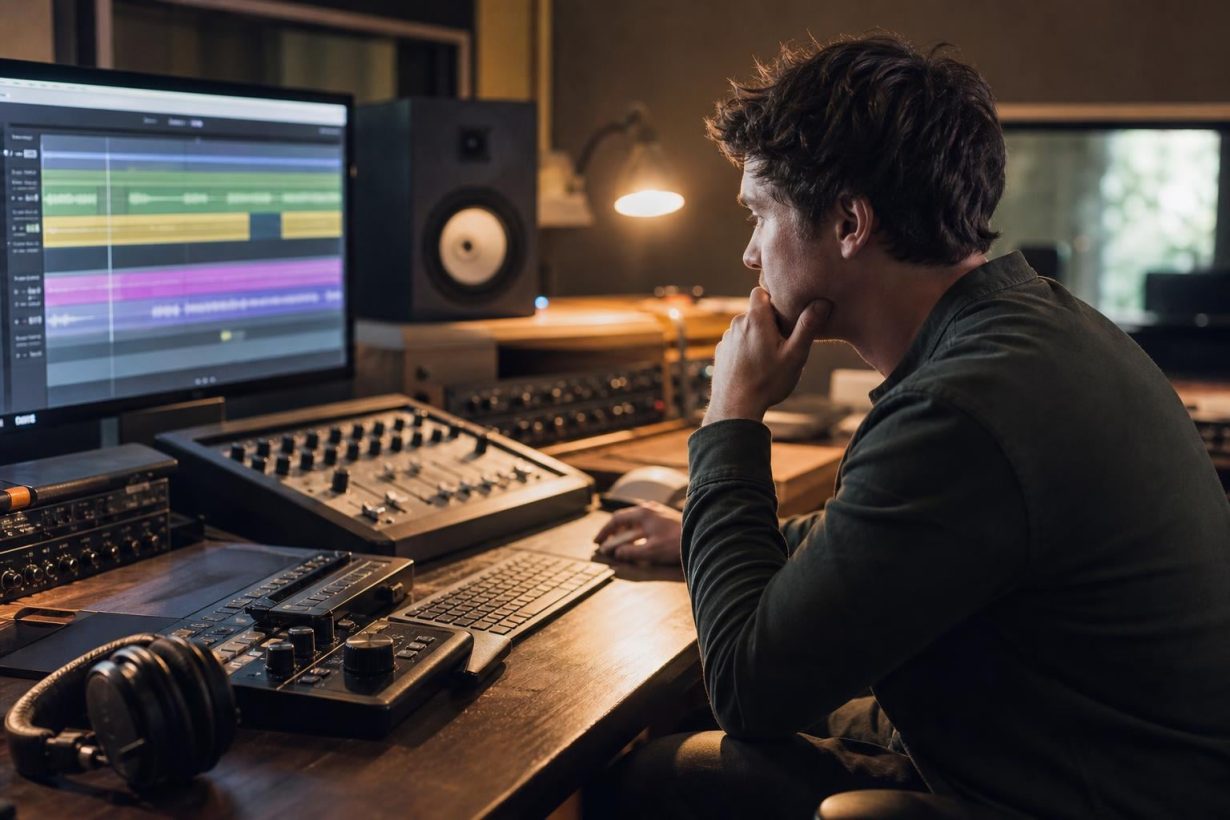
Upbeat music for a commercial typically falls between 100 and 140 BPM, uses major keys, and features bright instrumentation like acoustic guitars, funky bass, or electronic synths. Choosing the right track is only half the battle. You also need to understand licensing terms like sync licenses, Content ID, and PROs to keep your ad running without legal trouble. This glossary covers all of it in plain language.
You found the perfect upbeat track for your commercial. Then the licensing fine print killed it. This glossary cuts through every confusing term you’ll hit, from BPM to sync license to Content ID, so you pick the right music and keep your ad live on every platform.
This guide is written for one person: the marketer producing a branded ad (maybe their first, maybe their fifth) who needs to understand both the music and the legal side before spending a dollar.
Why this guide exists: Most search results for upbeat music for a commercial are either music libraries with no context or licensing guides with no music advice. Neither solves the whole problem. This page does both.
If you’re ready to browse tracks right now, explore Foximusic’s playlists organized by mood and genre.
This table gives you a fast reference for every term covered in this guide. Scan it now, then read the detailed definitions below.
| Term | Plain-Language Definition | Why It Matters for Your Commercial |
|---|---|---|
| Upbeat music | Energetic, positive-sounding music with fast tempo and bright tone | Sets the emotional baseline for your ad |
| BPM (Beats Per Minute) | How many beats occur in one minute of music | Determines whether a track feels energetic or relaxed |
| Tempo | The speed of a piece of music | Faster tempos increase cognitive engagement in ads |
| Major key | A musical scale that sounds happy or bright | Most upbeat commercial tracks use major keys |
| Sync license | Permission to pair music with visual media | Required for any commercial using copyrighted music |
| Master use license | Permission to use a specific recording | Separate from the sync license; both are needed |
| Royalty-free music | Music licensed with a one-time fee, no per-use royalties | Simplifies budgeting and avoids recurring costs |
| Content ID | YouTube/platform system that scans audio fingerprints | Uncleared tracks get your ad flagged or muted |
| PRO | Organization that collects performance royalties (ASCAP, BMI, SESAC) | PRO-affiliated tracks may trigger extra fees for broadcast |
| Perpetual license | A license that never expires | No renewals, no surprise costs years later |
| Commercial use license | Permission to use music in monetized or promotional content | Without it, your ad can be taken down |
| Blanket license | One license covering an entire music catalog | Useful for agencies producing many ads |
| Jingle | A short, original composition created for a brand | Custom-made, memorable, but expensive |
| Underscore / background music | Music that plays behind dialogue or voice-over | The most common music role in commercials |
| Sonic branding / audio logo | A short audio signature tied to a brand identity | Think Intel’s five-note chime or Netflix’s “ta-dum” |
| Music supervisor | The person responsible for selecting and clearing music | Common in agencies and large productions |
| Mood congruence | Matching the music’s emotion to the ad’s message | Mismatched music confuses viewers and hurts recall |
| Library music / production music | Pre-made tracks available for licensing | Faster and cheaper than commissioning original music |
| Broadcast license | Usage rights specifically for TV and radio | Standard commercial licenses often don’t cover broadcast |
| Watermarked preview | A low-quality test file with an audio watermark | Lets you test-edit before paying for a license |
Upbeat music for a commercial is any track that sounds energetic, positive, and forward-moving. It makes the listener feel good. But “upbeat” isn’t just a vibe. It’s a set of measurable musical characteristics.
BPM measures how many beats happen in one minute of music. It’s the single most important number when filtering tracks. The higher the BPM, the more energetic and upbeat a song feels.
For commercials, the sweet spot is 100 to 140 BPM:
A feel-good pop song at 110 BPM is upbeat yet accessible, which is exactly what broad-appeal commercials need.
Tempo is the broader concept that BPM quantifies. Classical musicians use Italian terms (Allegro means fast and lively, Vivace means very fast and vibrant), but in commercial music production, everyone just says the BPM number.
Most upbeat commercial music is written in a major key. Major keys sound bright, happy, and resolved. Minor keys sound darker, moodier, or melancholic. When you hear a track and think “that sounds cheerful,” it’s almost certainly in a major key.
This isn’t just instinct. Research backs it up.
A study published in the Journal of Consumer Research found that buying intention was higher when advertisements were paired with happy background music. Separately, research in Physiology & Behavior showed that exciting music with fast tempos increases cognitive engagement and advertising likability.
And here’s the number that should matter most to any marketer: when asked whether a brand’s advertising music aids recall, 80.3% of participants said yes. Music activates the same brain regions responsible for emotion and memory, which means an upbeat track doesn’t just set a mood. It makes your brand stickier.
For a deeper look at how upbeat tracks work in video content, read this guide on upbeat royalty-free music for video.
Genre isn’t background noise. It’s emotional coding. It tells the audience how to feel before a single word is spoken. Here are the genres that show up most often in upbeat commercial music, along with when to use each one.
Bright melodies, clean production, and universal appeal. Pop is the default genre for consumer-facing commercials because almost everyone responds to it positively. Think food delivery apps, retail sales, and travel brands.
Acoustic guitars, handclaps, warm vocals. This genre signals authenticity and works well for lifestyle brands, organic products, and anything that wants to feel approachable rather than corporate.
Piano-driven or guitar-driven tracks with a building structure. Common in B2B ads, SaaS explainer videos, and company culture reels. The sound is optimistic and professional without being edgy.
For more on this style, check out this guide on background music for corporate videos.
Funky basslines, body percussion, and rhythmic energy. Funk adds personality and swagger. It works for fashion brands, food and beverage spots, and any ad that wants to feel playful.
Synth-heavy, pulsing, modern. Electronic tracks suit tech products, gaming, fitness brands, and anything targeting a younger demographic. The energy is high, and the sound feels forward-looking.
Confident, rhythmic, cool. Hip-hop beats work for streetwear, automotive, and lifestyle brands. The tempo can be slower than other upbeat genres, but the swagger and production style still feel energetic.
This is the 2025-2026 trend worth watching. Marketers are tapping into micro-genres like lofi hip-hop, synthwave, and Afrobeat to reach highly specific audiences. These hyper-targeted sounds make ads feel fresh and relevant instead of generic. A synthwave track in a retro-themed sneaker ad or an Afrobeat groove in a global fashion campaign signals that the brand actually understands its audience.
Practitioners on Reddit’s r/editors community frequently discuss how genre choice can make or break a commercial edit, with several noting that matching genre to audience demographics matters more than simply picking something “upbeat.”
Need upbeat music you can actually use in your ads? Browse Foximusic’s curated playlists by mood and genre. Every track is Content ID-cleared with a lifetime license, so you won’t face takedowns or recurring fees.
Finding great upbeat music for a commercial is the fun part. Licensing it correctly is where most marketers get tripped up. Here’s every term you need to understand.
A sync license grants permission to synchronize music with visual media. Any time music plays alongside video in a commercial, a sync license is required. The license covers the musical composition (the notes and lyrics) and is typically controlled by the publisher or songwriter.
This covers the specific recording of a song. It’s separate from the sync license and is controlled by whoever owns the master recording (usually a record label). Both a sync license and a master use license must be cleared before you can legally use a track in a commercial.
For a more detailed breakdown of types of music licenses, that linked guide covers all seven.
A major sync placement for a national TV commercial can cost $50,000 to $500,000 or more. That’s for a single popular song. Traditional negotiations can drag on for months, and the rights you get might only last a couple of years.
This is exactly why royalty-free licensing exists. For a detailed guide on how much a song license costs across different use cases, that breakdown is worth reading.
“Royalty-free” does not mean free. It means you pay a one-time licensing fee and then owe no additional royalties each time the music is used or broadcast. This model simplifies budgeting dramatically compared to traditional sync deals.
The confusion around this term is real. Practitioners on forums and Reddit threads regularly report situations where clients assumed “royalty-free” meant no cost at all, leading to awkward budget conversations. For a clear explanation of whether royalty-free music can be used commercially, that guide covers the specifics.
Content ID is YouTube’s automated system for scanning uploaded audio against a database of registered tracks. If your commercial uses a track that’s registered in Content ID but not properly cleared for your use, the platform can flag your video, mute the audio, or redirect ad revenue to the rights holder.
This isn’t just a YouTube problem. One user on Adobe’s community forums described adding stock music to a business video intended for Facebook and Instagram. They had a license code that only covered YouTube. Facebook flagged the video immediately.
If you want to understand Content ID and AdRev in detail, that explainer walks through exactly how the system works.
ASCAP, BMI, and SESAC are PROs. They collect royalties when music is performed publicly, including on TV and radio. If the music in your commercial is affiliated with a PRO, the broadcaster may owe additional performance royalties on top of whatever license you already paid for.
This is a critical consideration for TV commercials. PRO-free music eliminates this extra cost entirely. For more on navigating this, read about broadcast music without PRO headaches.
A perpetual license means the rights never expire. You buy it once, and you can use that track in your commercial forever. The alternative is a time-limited license that requires renewal (typically every one to two years), which creates ongoing costs and the risk that your ad suddenly loses its music rights.
This is the license tier that explicitly permits using music in monetized content, advertisements, and promotional material. A personal license typically doesn’t cover this. If you’re running paid ads, you need commercial-grade rights.
A blanket license covers every track in a catalog rather than individual songs. Agencies that produce multiple commercials per month sometimes use blanket licenses to simplify clearance.
There is no legal rule that says using 10 seconds (or 30 seconds) of copyrighted music is automatically legal. This myth persists despite being completely false. Fair use is a complex legal defense, and it almost never applies to commercial work. The moment you use music to promote a product, service, or brand, fair use arguments essentially disappear.
Mood congruence is the principle that the music in your ad should match the emotional message you’re trying to communicate. When the music and message align, viewers process the ad more fluently and remember it better. When they clash (upbeat music over a serious message, or vice versa), viewers feel confused and disengage.
Rather than browsing music libraries aimlessly, work through this sequence:
Spotify’s Ad Studio team offers a useful piece of advice here: choose your background music last. Before picking a track, finalize your targeting, message, and campaign strategy. The music should serve those decisions, not drive them. They also recommend sticking to one music track per ad, because when it comes to music and dynamic sounds in ads, less is more.
For more on using music strategically in ads, this guide on instrumental background music for video advertising covers the topic in depth.
In May 2025, Warner Music Group filed a complaint against Designer Brands (the company behind DSW) for allegedly using WMG’s music in TikTok ads without a license. This is a company with decades of experience in advertising. If they can get it wrong, anyone can.
The lesson: trending sounds on TikTok, Instagram, or YouTube Shorts are not automatically licensed for commercial use. Organic posts and paid ads have different legal requirements. For guidance specific to social platforms, this guide on royalty-free music for Facebook and Instagram ads explains the differences.
It doesn’t. Royalty-free means you don’t pay ongoing royalties after the initial license fee. The initial fee still exists. Some platforms also charge differently for personal versus commercial use, so always verify the license tier before downloading.
Starting with a track you love and building the ad around it sounds creative, but it usually backfires. The music should reinforce the story, not replace it. Define the emotional journey first (problem, tension, resolution, call to action), then find a track that supports each beat.
A track can be perfectly licensed for a website video but still trigger automated flags on YouTube, Facebook, or Instagram. Content ID systems don’t check your license agreement. They check their audio database. If the track is registered and your account isn’t whitelisted, your ad gets flagged. Always confirm that the music provider offers Content ID clearance before licensing upbeat music for a commercial that will run on social platforms.
If your commercial will air on TV or radio, a standard commercial license often isn’t enough. You may need an extended or broadcast license, and if the track is affiliated with a PRO, the broadcaster will owe additional performance royalties. Planning for broadcast from the start avoids expensive surprises later.
For a broader view of music licensing for content creators, that comprehensive guide covers every scenario.
A jingle is a short, original composition written specifically for a brand. Think “Ba da ba ba ba, I’m lovin’ it.” Jingles are custom-made and can cost thousands to produce, but they create strong brand association because the music belongs exclusively to that brand.
Underscore is music that plays behind dialogue or voice-over. It supports the narrative without competing with it. In most commercials, the music functions as underscore, sitting at a lower volume during speech and swelling during visual-only moments.
A sonic brand is a short, distinctive sound associated with a company. Intel’s five-note chime. Netflix’s “ta-dum.” HBO’s static buzz. Audio logos are shorter than jingles (usually under three seconds) and function as auditory brand signatures. For more on how sound connects to brand identity, that guide covers the visual and auditory sides together.
A music supervisor is the person responsible for finding, selecting, and clearing music for a production. In advertising agencies, this role ensures that the chosen track fits the creative brief and is legally cleared for the intended use.
Library music (also called production music or stock music) consists of pre-made tracks created specifically for licensing. These tracks are ready to use, much cheaper than commissioning original music, and available in a wide range of moods, genres, and tempos. Most upbeat music for a commercial today comes from production music libraries.
A broadcast license grants the right to use music in television and radio content. This is a separate right from digital/online distribution and typically costs more. Some royalty-free platforms include broadcast rights in their extended license tiers.
A watermarked preview is a low-quality version of a track with an audible watermark (usually a voice or tone repeated throughout). It lets editors test a track in their timeline before committing to a purchase. This is standard practice: download the preview, test the edit, then buy the license if the track works.
Most upbeat commercial tracks fall between 100 and 140 BPM. The 100 to 120 range works for broadly appealing, feel-good ads (think lifestyle and consumer products). The 120 to 140 range suits high-energy spots for sports, tech, or fitness brands.
Technically yes, but it requires both a sync license and a master use license. For a well-known song, this can cost $50,000 to $500,000+ and take months to negotiate. Royalty-free alternatives offer similar emotional impact at a fraction of the cost and time.
No. This is a persistent myth. There is no duration threshold that makes unauthorized use of copyrighted music legal. Any use of copyrighted music in a commercial requires proper licensing, regardless of how short the clip is.
A sync license is negotiated per-use for a specific composition and recording, often with time limits and territory restrictions. A royalty-free license is a one-time payment that grants ongoing usage rights (often perpetual and worldwide) without per-use royalties.
Platform systems like Content ID scan audio fingerprints automatically. They don’t check your license documents. If the track is registered in the system and your account isn’t cleared, the platform flags it. This is why Content ID-cleared music matters for any ad distributed on social platforms.
After. Spotify’s Ad Studio team recommends choosing background music as the last step in the creative process. Define your targeting, message, and campaign strategy first, then select music that supports those decisions.
Pop, indie pop, funk, electronic, corporate/motivational, and hip-hop are the most common. In 2025 and 2026, micro-genres like lofi hip-hop, synthwave, and Afrobeat are increasingly popular for reaching niche audiences with upbeat music in a commercial context.
Often, yes. A license that covers YouTube may not cover Facebook, Instagram, or TikTok. And a digital license almost never covers TV or radio broadcast. Always verify that your license explicitly covers every platform where your commercial will appear.
Looking for Content ID-safe upbeat music for your next commercial? Foximusic’s catalog is 100% in-house, PRO-free, and licensed with a single payment for lifetime rights. No recurring fees, no third-party rights complications, no flagged ads. Browse the full catalog and find your track.
Generate production-ready text-to-video prompts instantly and get pro-level results with our free video prompt generator tool.








 English English
  Spanish
 French
 Italian
 German
 Portuguese
 Chinese
 Japanese
 Hebrew