✨ Summarize article with AI

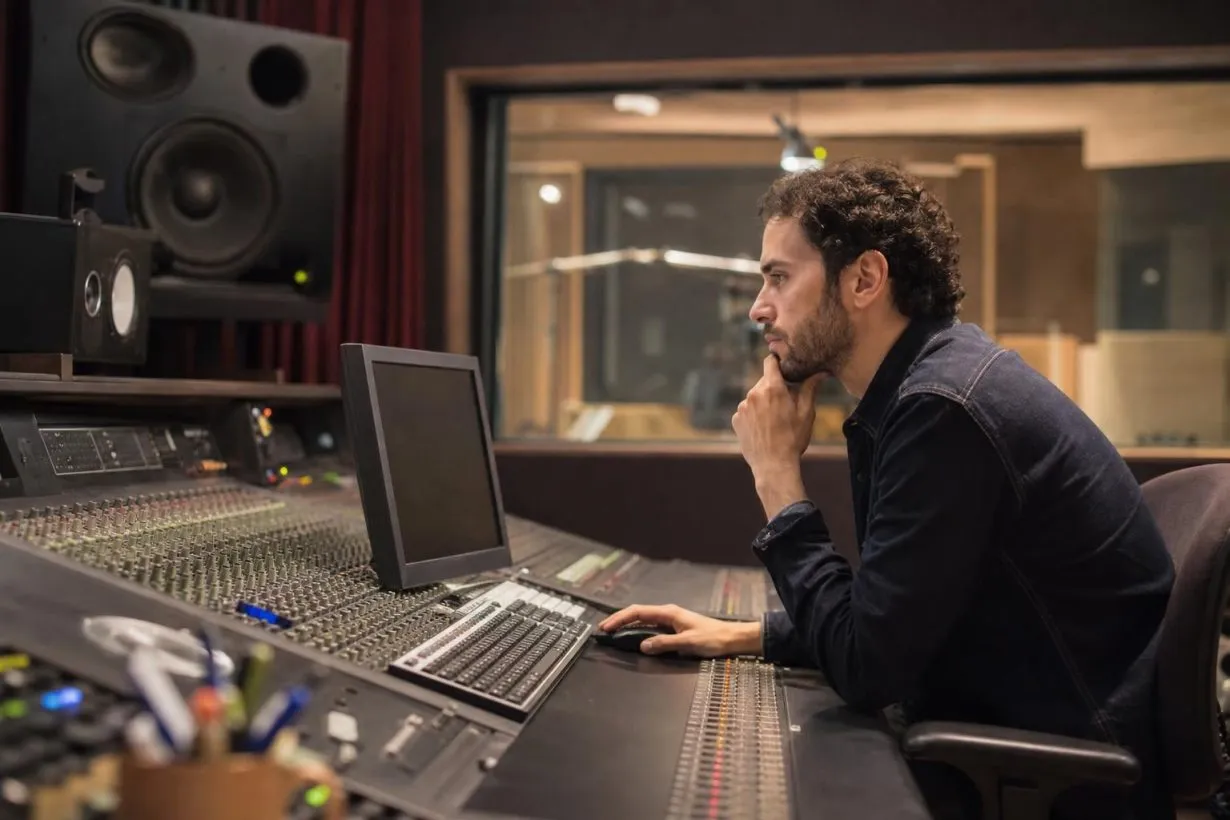
Commercial music licensing costs range from $10 per track (royalty-free stock music) to over $500,000 (hit songs in national TV ads). The price depends on four things: how popular the song is, where you’ll use it, how long you need the rights, and how large your audience will be. This guide breaks down real dollar amounts by license type and use case so you can budget accurately.
You just got the question every marketing manager dreads: “How much should we budget for music?” You searched for an answer and found prices ranging from free to half a million dollars. That’s not helpful.
This guide exists because commercial music licensing cost is one of the most confusing line items in any production budget. A thread on Reddit’s r/Music that ranks on the first page of Google for this exact topic shows a user frustrated by the total lack of transparent pricing in the industry. That frustration is valid. The pricing spectrum spans five orders of magnitude, and the reason comes down to a few structural quirks of copyright law that most people never learned.
By the end of this page, you’ll know exactly what your specific project should cost, which license types you actually need, and how to avoid the mistakes that lead to lawsuits.
If you’re already familiar with the basics and just need affordable royalty-free tracks, that’s the shortcut.
Commercial music licensing cost is the total price a business, creator, or agency pays for legal permission to use music in a revenue-generating or publicly distributed project. This includes videos, ads, podcasts, apps, broadcasts, and even background music in a retail store.
The cost is not one number. It’s a combination of fees determined by the type of license, the scope of use, the popularity of the song, and the territory where the content will be distributed.
Here’s a quick-reference table:
| Use Case | Typical Cost Range |
|---|---|
| YouTube / social media video | $10 – $75 per track (royalty-free) |
| Podcast background music | $10 – $50 per track |
| Digital ads (Meta, Google) | $29 – $2,000 per track |
| In-store / venue music | $1,400+/year (PRO fees alone) |
| Indie film | $500 – $2,000 per song |
| Network TV placement | $3,000 – $45,000 per episode |
| National TV commercial | $50,000 – $500,000+ |
| AAA video game | $15,000 – $150,000 |
| Studio film trailer | $100,000 – $1,500,000 |
The same song can cost $29 on a royalty-free platform or $250,000 through a sync deal. That sounds absurd until you understand the four variables driving every price:
Song popularity. A track by an unknown indie producer is cheap to license. A Billboard hit owned by a major label is not. The rights holders know the brand recognition that song carries, and they price accordingly.
Territory. A license covering the United States costs less than one covering the entire world. Global campaigns pay a premium for worldwide rights.
License term. Some licenses expire after a year. Others are perpetual. A lifetime music license costs more upfront but eliminates renewal fees permanently.
Distribution scale. Playing a track in a local café is a different universe from airing it during the Super Bowl. The larger the audience, the higher the fee.
Here’s the structural reason licensing gets expensive fast. Every recorded song contains two separate copyrights:
To use a song legally in any commercial project, you need permission from both rights holders. This dual-clearance requirement is why licensing a recognizable song for advertising gets so costly so quickly. You’re negotiating two separate deals, often with two separate legal teams.
Royalty-free music libraries sidestep this entirely by owning both the composition and the master. That’s the core reason they’re able to offer simple, one-time pricing. For a deeper look at all the license types involved, that breakdown covers the full picture.
Each license type covers a specific right. Most commercial projects require at least one, and many require two or three stacked together.
What it is: Permission to pair a song with visual media, whether that’s a YouTube video, a TV show, a commercial, or a film.
What it costs: This is the widest range in all of music licensing. Royalty-free sync rights start around $10 to $50 per track for online video. Independent artists licensing directly for mid-tier projects typically charge $300 to $2,000. For popular songs from major labels in national TV commercials, expect $10,000 to $500,000.
In 2024, a tech brand reportedly paid $250,000 for a single hit song in a global ad campaign covering all territories and media. Meanwhile, an indie filmmaker secured five tracks for $3,500 total by working with emerging artists. Same industry, wildly different budgets.
Who pays: Anyone placing music against video or visual content.
Watch out: A sync license only covers the composition. You typically also need a master use license (below) unless you’re using a royalty-free platform that bundles both.
What it is: Permission to use a specific recording of a song. If you want the original Fleetwood Mac version rather than a cover, you need this license from whoever owns the master.
What it costs: Negotiated case by case, but it usually mirrors the sync license fee. If the sync costs $50,000, expect the master use license to add roughly the same amount.
Who pays: Anyone using a pre-existing recording in media. Not needed if you commission a new recording or use a library that owns its masters.
What it is: Permission to publicly perform music. This covers everything from a restaurant playing background music to a radio station broadcasting songs. In the U.S., three performing rights organizations (PROs) handle these licenses: ASCAP, BMI, and SESAC.
What it costs in 2026:
| PRO | Minimum Annual Fee (Small Business) |
|---|---|
| ASCAP | ~$402 |
| BMI | ~$415 |
| SESAC | ~$580 |
Combined, that’s over $1,400 per year before you’ve paid for the music service or equipment to actually play anything. And those are minimums. If your venue hosts live bands or has a large floor plan, fees climb quickly.
One winery owner, in a public comment to the Department of Justice, described current music license fees as “astronomically expensive.” That sentiment is common among small business owners who discover these costs after they’ve already opened.
Who pays: Brick-and-mortar businesses, venues, event organizers, broadcasters.
Watch out: If you’re producing content for broadcast (TV, radio), you may want to explore PRO-free music for broadcast to avoid these recurring obligations entirely.
What it is: Permission to reproduce a copyrighted composition. This applies when you’re pressing vinyl, selling downloads, streaming a cover song, or manufacturing CDs.
What it costs: The U.S. Copyright Royalty Board sets a statutory rate. As of January 1, 2026, it’s 13.1 cents per copy for songs under five minutes, up from 12.7 cents in 2025.
For context, that rate was frozen at 9.1 cents for 15 years straight, from 2006 through 2022. Songwriters spent over a decade watching their per-unit income stagnate while streaming reshaped the entire industry. The recent increases are a correction, not an anomaly.
On the streaming side, songwriters and publishers now receive 15.3% of a U.S. interactive streaming service’s revenue, up from 15.25% in 2025.
Who pays: Record labels, distributors, cover artists, anyone manufacturing or distributing reproductions of a song.
What it is: A license where you pay once and owe no per-use royalties afterward. The name is slightly misleading, because there is a fee. The “royalty-free” part means you won’t owe additional payments each time the content is played or viewed.
What it costs: Typically $10 to $150 per track depending on the tier. Personal-use tracks for non-monetized content run $10 to $25. Commercial licenses for monetized videos and client work fall in the $29 to $50 range. Extended licenses covering broadcast, apps, and games cost $100 to $150 per track.
Bundle pricing drops per-track costs significantly. For instance, licensing 25 commercial tracks through a bundle can bring the cost below $6 per track.
Browse Foximusic’s current catalog to see how this pricing works in practice.
Who pays: YouTubers, podcasters, freelance video editors, marketing agencies, app developers.
Watch out: Not all royalty-free licenses are equal. Check whether the license is perpetual or time-limited, whether it covers Content ID clearance, and whether it includes broadcast rights or only online use.
Blanket license: One fee covers an entire catalog. PROs use this model. Subscription music services operate similarly.
Exclusive vs. non-exclusive: An exclusive license means only you can use that track. It costs significantly more. Most royalty-free platforms sell non-exclusive licenses, which keeps prices accessible.
Perpetual / lifetime license: No expiration on your usage rights. You pay once, use forever, and never worry about renewals. The lifetime vs. subscription comparison is worth reviewing if you’re deciding between models.
This is the section most people actually need. Find your project type below.
A YouTube creator or social media manager typically pays $10 to $75 per track using royalty-free music. The critical factor here isn’t just price but Content ID clearance. If the track triggers a Content ID claim, your video gets demonetized or blocked regardless of whether you paid for a license.
Practitioners on Reddit frequently cite Content ID issues as their biggest headache, worse than the licensing cost itself. Choose a platform that owns its catalog and can guarantee clearance.
For Instagram and Facebook ad placements specifically, check this guide on music licensing for social ads.
Background music and intro/outro tracks for podcasts typically cost $10 to $50 per track through royalty-free libraries. The podsafe music guide covers what to look for in podcast-specific licensing.
Ads require commercial rights, which means a standard personal license won’t cut it. Expect $29 to $2,000 per track depending on whether you’re using royalty-free music or licensing directly from an artist. The commercial music licensing cost for ads tends to be higher because the content is directly revenue-generating and often receives paid distribution.
One common trap for brands: using music from a TikTok or Instagram music library in an ad. Those in-platform libraries are licensed for organic posts only. The moment you put paid spend behind the content, the platform license no longer applies, and you’ve created an unlicensed use.
This is where costs jump dramatically. Network TV placements run $3,000 to $45,000 per episode for existing tracks. National TV advertising with popular songs commands $50,000 to $800,000 or more. Studio film trailers using hit-driving needle drops can reach $1.5 million.
Broadcast licensing includes television, major advertising campaigns, streaming platform productions, and large-scale media distribution. These audiences are massive, and the fees reflect that scale.
AAA video game placements fall between $15,000 and $150,000 for recognizable songs. Indie games and apps can use royalty-free music under extended licenses, typically $100 to $150 per track. The game developer licensing guide breaks this down further.
Course creators on platforms like Udemy, Kajabi, or Teachable need music that’s licensed for commercial distribution. Royalty-free tracks with a commercial or extended license work well here, running $29 to $150 per track. More detail in the music for courses guide.
The hidden budget killer. Between ASCAP, BMI, and SESAC minimums, a small business pays over $1,400 per year just for the right to play music publicly. Add the cost of the music service itself, and you’re looking at $2,000 or more annually. This is a recurring cost with no end date, and it catches many new business owners off guard.
The commercial music licensing cost that should scare you most isn’t what you pay. It’s what you pay when you don’t.
Under the U.S. Copyright Act, damages for infringement range from $750 to $30,000 per work. If the court finds the infringement was willful, that number climbs to $150,000 per work. These penalties compound. A business using ten unlicensed songs faces potential liability in the millions.
In late April 2025, Warner Music Group sued cookie chain Crumbl for nearly $24 million, alleging the brand used copyrighted music without permission across its social media content for several years. This wasn’t a small creator getting a takedown notice. This was a multi-million dollar enforcement action against a well-known brand.
Many business owners assume their Spotify or Apple Music subscription covers playing music in their shop, café, or office. It does not. Those services are licensed for personal, private use only. Playing them in a commercial setting violates the terms of service and leaves you legally exposed.
Industry analysis estimates a $1.4 billion revenue gap from unlicensed commercial use of music. Bridging that gap is a growing enforcement priority. The “I’ll just risk it” approach is getting more dangerous every year.
Even if you don’t face a lawsuit, unlicensed music in online content triggers automated systems. YouTube’s Content ID can demonetize your video, redirect ad revenue to the rights holder, or block your content entirely. For creators who depend on ad revenue, a single claim can wipe out months of earnings.
The royalty-free music market grew from $1.52 billion in 2025 and is projected to reach $2.03 billion by 2030. This isn’t a niche workaround. It’s the fastest-growing segment of the licensing industry, driven by predictable pricing, worldwide usage flexibility, and the elimination of recurring royalty payments.
Modern royalty-free catalogs have moved well past the low-quality stock music reputation of the 2010s. Professional-grade tracks with full, loop, and short edits are standard at platforms that produce their own music.
Per-track costs drop sharply with bundles. A single commercial track might cost $29, but a 25-track bundle can bring that down to under $6 per track. If you’re producing content regularly, planning purchases in bulk makes a measurable difference in your annual music budget.
A subscription model charges you monthly whether you use music that month or not. Over three to five years, the total cost often exceeds what you’d pay for lifetime licenses covering the same number of tracks. The math matters, and the one-time vs. subscription comparison walks through the numbers.
If your content airs on television or radio, PRO-affiliated music creates ongoing performance royalty obligations. Music from platforms that own 100% of their catalog and operate outside the PRO system eliminates that cost entirely.
Imagine a freelance video editor producing 10 YouTube videos per month for a marketing agency. Each video needs one background track.
Subscription model: $15 to $30/month = $180 to $360/year. If you cancel, you may lose the right to use tracks in existing content (depending on the platform’s terms).
Royalty-free lifetime model (bundle pricing): 25 tracks at roughly $6/track = $150 total. Use them forever. No renewals.
Over three years, the subscription costs $540 to $1,080. The lifetime bundle costs $150. The commercial music licensing cost difference is significant, and the lifetime option carries no risk of losing rights if you stop paying.
Ready to stop worrying about claims, renewals, and confusing licensing terms? Browse Foximusic’s curated playlists to find tracks that fit your project, with clear commercial rights and lifetime use.
It depends on the song and the use. Royalty-free tracks cost $10 to $150 each. Licensing an indie artist’s song for a mid-tier project runs $300 to $2,000. A hit song for a national TV commercial can cost $50,000 to $500,000 or more.
Yes, if you’re using music you don’t own. YouTube’s built-in audio library is free to use on the platform, but for professional-quality tracks with guaranteed Content ID clearance and monetization rights, you’ll want a proper commercial license.
No. Spotify, Apple Music, and similar streaming services are licensed for personal, private listening only. Playing them in a store, restaurant, or any public commercial setting is copyright infringement, regardless of whether you have a paid subscription.
Royalty-free music libraries with bundle pricing offer the lowest per-track cost for cleared commercial rights. Bundles can bring the price below $6 per track with lifetime usage included.
You face potential statutory damages of $750 to $150,000 per work infringed, platform takedowns, Content ID claims that redirect your ad revenue, and possible lawsuits. Warner Music Group’s $24 million suit against Crumbl in 2025 shows that enforcement is real and escalating.
A sync license covers the underlying composition (the song as written). A master use license covers the specific recording. You typically need both to use a commercially released song in video content. Royalty-free platforms that own both rights bundle them into a single license.
In 2026, minimum annual fees are approximately $402 (ASCAP), $415 (BMI), and $580 (SESAC). Combined, that’s over $1,400 per year before accounting for the actual music service.
Yes, in the sense that you pay no per-use or per-play royalties after the initial purchase. The upfront license fee is the only cost. The name confuses people because there is a purchase price, but unlike traditional licenses, there are no recurring royalty payments tied to how often the content is viewed or played.
Generate production-ready text-to-video prompts instantly and get pro-level results with our free video prompt generator tool.







 English English
  Spanish
 French
 Italian
 German
 Portuguese
 Chinese
 Japanese
 Hebrew