✨ Summarize article with AI

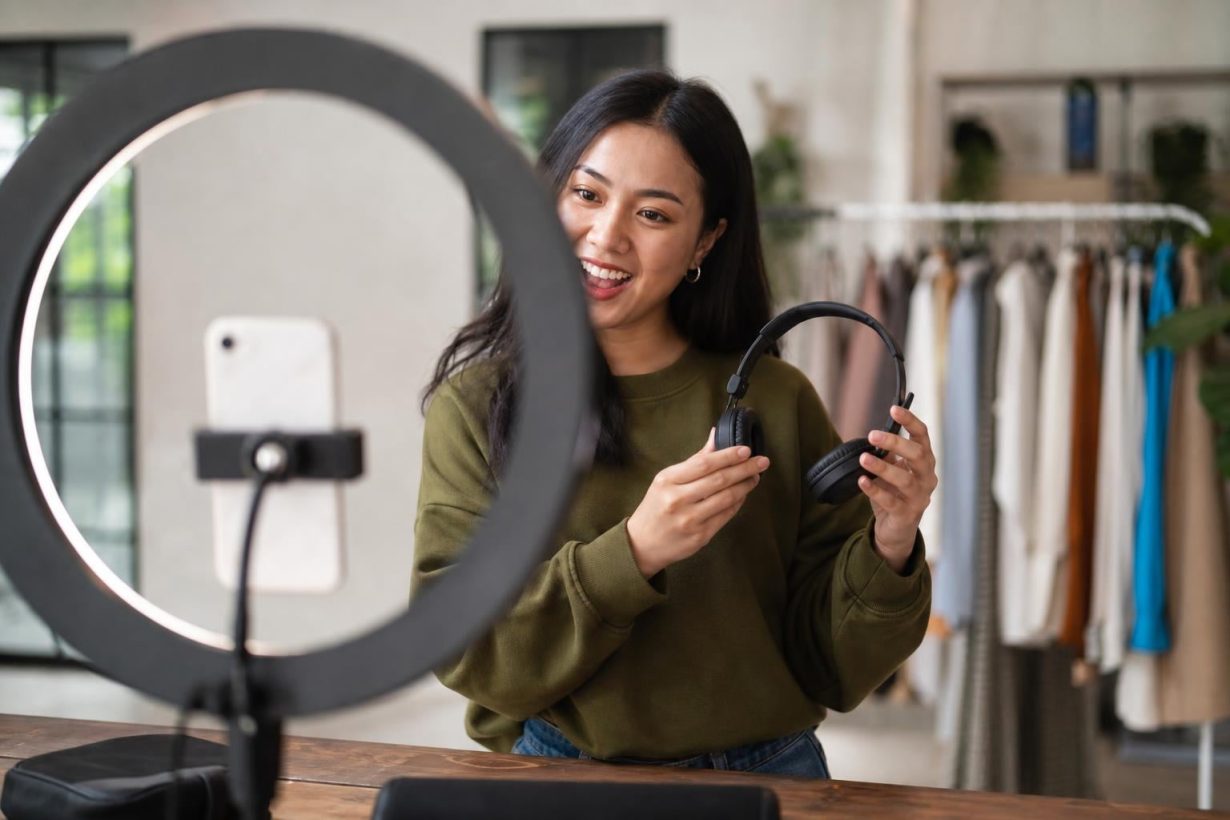
Commercial music licensing on TikTok determines which songs you can legally use in videos that promote a business, product, or service. TikTok’s general sound library is for personal use, not brand content. For commercial posts, use TikTok’s Commercial Music Library (CML) or separately licensed music. If the same video will also run on Instagram, YouTube, ads, or client channels, the CML is not enough, and you need music licensed for those platforms too.
Who this is for: Small business owners, TikTok Shop sellers, social media managers, and creators posting sponsored or promotional TikToks.
How this was researched: Based on TikTok’s current Music Terms, Commercial Music Library Terms, Business Help Center documentation, U.S. Copyright Office guidance, and real-world practitioner discussions from Reddit and LinkedIn.
Why this exists: To help you avoid muted videos, ad rejections, and copyright confusion before you hit publish.
Commercial music licensing on TikTok means having permission to use a song in content that promotes a business, product, service, client, or sponsor. If your TikTok is promotional in any way, the music rules change.
TikTok’s general sound library, the one with millions of trending songs, is licensed for personal use. It covers people posting dance videos, vlogs, and comedy sketches for fun. It does not cover a bakery showing off a new cake flavor, a skincare brand demoing a product, or a creator plugging a sponsor.
For commercial content, TikTok points users toward its Commercial Music Library. If the music isn’t in the CML and your post is promotional, you either need to confirm you have rights to the audio or use music licensed separately. Understanding how royalty-free music works commercially is a good starting point for anyone confused by the difference.
“Available in the app” is not the same as “cleared for your business video.” This single misunderstanding causes most of the copyright problems businesses run into on TikTok.
Commercial use is broader than many people think. It includes:
Note: This article provides practical information, not legal advice. For major campaigns, famous songs, or disputed rights, consult a qualified lawyer.
TikTok organizes its audio into three categories. Knowing which bucket your sound comes from determines whether it’s safe for business content.
These are the songs and audio clips in TikTok’s main music library. They are licensed for individual, non-commercial use. A personal account posting a fun video? Fine. A business account promoting a product with that same trending song? That’s where problems start.
TikTok’s Music Terms are clear: general Sounds should not be used to promote, advertise, sponsor, or associate music with a brand or business unless the user has obtained the necessary rights.
These come from TikTok’s Commercial Music Library, a pre-cleared catalog of roughly one million tracks. On mobile, you find them through Add Sound, then Commercial Sounds. On desktop, they’re available through TikTok’s Creative Center with filters for region, genre, mood, and placement.
Commercial Sounds are the platform’s designated safe zone for business content. They cover organic brand posts, video ads, branded content, and even duets or stitches with user videos, all within TikTok.
Audio that a user uploads rather than selecting from TikTok’s library. This includes voiceovers, custom jingles, and music baked into a video before upload.
The catch: if you use someone else’s Original Sound for commercial content, you’re taking a risk. TikTok’s terms say commercial users should not use Original Sounds uploaded by another user. And just because a creator uploaded a sound doesn’t mean it’s free of copyrighted material. That viral audio clip might contain a movie line, a remixed pop song, or a sample owned by a label.
TikTok’s Commercial Music Library is a curated catalog of tracks pre-cleared for business use on TikTok. It’s free for businesses to access (with some exceptions for Premium Tracks), and it includes music from independent artists, emerging musicians, and professional production houses.
The CML has grown significantly. A 2026 Fast Company report found that TikTok now works with over 125 associated rights holders, and the library includes licensed pop, electronic, and rap from label-signed artists. One track was reportedly used in nearly 150,000 videos. This isn’t just generic elevator music anymore.
But the CML comes with limits that matter for anyone thinking about TikTok music licensing beyond the platform itself. More on those limits below.
If you need commercial music for TikTok business videos and want to explore options now:
The Commercial Music Library works well in specific situations:
For a TikTok-only organic product demo or a business-account brand post, the CML is often the simplest option. Select a Commercial Sound, check that it’s available in your region and for your placement type, and post.
Two things to watch. Some CML tracks are labeled Premium, which means they may carry an additional fee when tied to ad inventory. TikTok’s CML Terms also mention Usable Placements, so not every track works for every ad format. Check both before publishing.
The CML stops being enough in several common scenarios.
Cross-platform posting. TikTok’s CML Terms say Commercial Sounds may only be posted or shared within TikTok and through TikTok sharing features. Uses outside TikTok require separate permission from the rights holders. So if you plan to post the same video to Instagram Reels, YouTube Shorts, LinkedIn, or a website, the CML license doesn’t cover those platforms.
Client deliverables. Agencies and freelancers often hand off videos to clients who reuse them in presentations, ads, websites, or pitch decks. A CML track in a client video creates a documentation gap, and most clients will ask for proof of license.
Paid ads outside TikTok. Running the same creative on Meta, Google, or programmatic networks means the music needs rights beyond TikTok’s walls.
Evergreen content. TikTok’s CML Terms state that if TikTok loses the right to a Commercial Sound, it can mute or take down affected videos with no liability. For product explainers, course intros, or landing page videos that need to last, a separate lifetime license is more predictable.
A specific famous song. If a brand wants a recognizable hit, that typically requires direct licensing from the label and publisher (often called a sync and master-use license), which is a different process entirely.
For creators who need one-time purchase licensing with clear commercial rights and instant proof of license, a separate royalty-free catalog fills the gap the CML leaves open.
Usually not. This is the most common frustration in TikTok commercial music licensing, and practitioners on Reddit voice it constantly.
One thread in r/smallbusiness bluntly complains that TikTok’s commercial library feels much weaker than the personal-account music library. Another recurring pattern across Reddit dropshipping and social media marketing forums: users ask why other brands appear to use non-CML sounds and whether it’s a bug, a workaround, or just risk tolerance.
The honest answer: some brands do use uncleared music and haven’t been caught yet. That doesn’t make it legal or safe. Do not build your music policy around what another account appears to be getting away with.
The consequences are real. In 2025, Sony sued retailer DSW for allegedly using Sony recordings in social media ads, arguing that TikTok provides a pre-cleared commercial audio library but that Sony’s recordings were not part of it.
For most small businesses, the realistic risk isn’t a lawsuit. It’s a muted video, a rejected ad, a lost trending moment, or a client asking for proof you can’t provide.
Don’t assume you can. TikTok’s CML Terms explicitly limit Commercial Sounds to TikTok and TikTok sharing features. Commercial uses on third-party platforms, TV, radio, or other media require separate permission from the rights holders.
A LinkedIn article from a sports media workflow practitioner confirmed this gap: sports teams asked whether TikTok’s CML was safe for social posts, and the answer emphasized that the license only covers TikTok, not reposts to Instagram, YouTube, or elsewhere.
If your workflow involves creating one video and distributing it across platforms (which is most social media managers’ reality), you need music licensed for all those destinations. That means either replacing the audio for each platform or using a single track with broad commercial rights from the start.
For more on platform-specific rules, see these guides on music licensing for Instagram and licensed music in social media.
Need music that works across TikTok, Reels, Shorts, and ads?
This TikTok warning appears when you try to add a sound that isn’t cleared for the commercial context of your account or post. It’s not a glitch. It’s TikTok telling you the track’s license doesn’t cover business use.
Here’s what to do instead of trying to work around it:
Practitioners on Reddit report that some sounds appear in TikTok’s general search but not in Commercial Sounds, which creates confusion. Others have found that adding audio through CapCut before uploading doesn’t bypass TikTok’s detection. The platform can still recognize and restrict embedded audio, so baking a song into the video file is not a reliable workaround.
Musicians on Reddit also report a related frustration: their own distributed songs sometimes show as “not licensed for commercial use” when accessed through a business account. Distribution to TikTok’s general library is not the same as commercial sync clearance. If you’re a musician wanting to use your own song in a business post, make sure it’s available through the CML or upload it as an Original Sound with confirmed rights.
This is a common mix-up worth addressing directly.
TikTok requires a content disclosure setting for commercial posts. It labels your content as either “Promotional content” (your own business) or “Paid partnership” (a third-party brand). Improper disclosure can lead to removal or make content ineligible for the For You feed.
But the disclosure toggle does not license music. It tells TikTok and viewers that the post is commercial. You still need the music rights separately.
| Question | Content disclosure | Music license |
|---|---|---|
| What it does | Labels the post as commercial | Gives permission to use a song |
| Who sees it | TikTok, viewers, brand partners | Platforms, rights holders, clients |
| Does it clear music? | No | Yes, if the license scope covers the use |
Creators often fear that disclosure kills reach. TikTok’s own internal study, comparing nearly 2 million videos, found no performance difference between posts with and without branded content disclosure. The bigger risk is skipping it.
The right music source depends on where the video will live, whether the post is commercial, and whether you need documentation. Here’s how it plays out in practice:
| Scenario | Risk | What to use |
|---|---|---|
| Business account posts organic product demo, TikTok only | Green | CML track, check region and placement |
| TikTok ad with CML track for correct placement | Green | CML, verify usable placements and Premium fees |
| Creator posts sponsored video using a trending general sound | Red | Switch to CML or separately licensed music |
| Brand uses personal-account workaround for more music | Red | Don’t do this |
| Brand uses another user’s viral Original Sound | Red | Avoid unless rights are documented |
| Video has popular music baked in from CapCut | Red | Replace with CML or licensed audio |
| CML video reposted to Reels, Shorts, or LinkedIn | Yellow/Red | Replace audio or use cross-platform license |
| Same track used across TikTok, website, YouTube, and ads | Green if licensed externally | Separate commercial license covering all channels |
| TikTok Live with recorded music | Red | Sounds and Commercial Sounds can’t be used in Live |
| Brand uses its own commissioned jingle | Green | Keep contracts and ownership documents |
A quick note on copyright structure: the U.S. Copyright Office explains that a recorded song often involves two separate copyrights, one for the musical composition and one for the sound recording. This is why licensing a famous song for an ad usually requires permission from both the publisher (composition) and the label (recording), commonly referred to as sync rights and master-use rights. For a deeper look at different license types and categories, see that guide.
Most ranking guides explain what the CML is but skip a reusable decision framework. Before posting any commercial TikTok, think about three layers.
Layer 1: Platform permission. Did TikTok make this sound available for this type of use? A CML track for a business post is green. A general library sound on a business post is a problem.
Layer 2: Campaign permission. Is the post promotional, paid, branded, or tied to a product? If yes, treat it as commercial. Turn on content disclosure when required. Use CML or separately licensed music. Keep proof if using external music.
Layer 3: Distribution permission. Where will the finished video live? TikTok only means the CML may be enough. TikTok plus Reels, Shorts, ads, website, or client delivery means you need separately licensed music that covers those platforms.
A video can be clear in one layer and risky in another. A CML track might be fine for a TikTok brand post but create problems when you export the same video to Instagram or run it as a paid ad outside TikTok. Checking all three layers takes less than a minute and prevents headaches that take hours to fix.
The creative fear behind commercial music licensing for TikTok is that CML tracks will make content feel generic. That fear is valid but solvable.
The trend is rarely about the song itself. It’s about the format: the POV setup, the before-and-after reveal, the text overlay timing, the ASMR product shot. You can keep the format and replace the sound.
A practical workflow:
Sound still matters for discovery. TikTok’s own research with Kantar found that 73% of respondents would “stop and look” at TikTok ads with audio, higher than any other platform in the study. But a clear voiceover plus a licensed upbeat bed can carry a hook just as well as a famous song, without the muting risk.
Consider building a repeatable brand sound: same intro sting, consistent tempo, recognizable mood across posts. A TikTok Shop seller doesn’t need a famous song to use sound well. A crisp voiceover plus licensed background music creates a professional, recognizable feel that works every time.
| Term | Plain definition | What it means on TikTok |
|---|---|---|
| Commercial music licensing | Permission to use music in business or brand content | Use CML on TikTok, or bring separately licensed music |
| Commercial use | Music use tied to promoting or endorsing a business | TikTok defines this broadly, including your own brand |
| General Sounds | TikTok’s main music library | Personal, non-commercial use only |
| Commercial Music Library | TikTok’s pre-cleared business catalog | Free for TikTok commercial content, with placement/region limits |
| Commercial Sounds | Tracks selected from the CML | Choose these when posting business content |
| Original Sound | User-uploaded audio | Risky for brands unless rights are confirmed |
| Sync license | Permission to pair a composition with video | Needed for audiovisual content outside platform licenses |
| Master-use license | Permission to use a specific recording | Required alongside sync for famous recordings |
| Royalty-free music | Music licensed with a fixed fee, no ongoing royalties | Not “free” or “unlimited,” always check scope |
| Usable Placements | Platforms and formats a CML track can appear on | Check before using any Commercial Sound |
| Premium Tracks | CML sounds with an extra fee | Fee shown when purchasing ad inventory |
| Content disclosure | TikTok’s commercial content label | Required for promotional posts, does not license music |
| Cross-platform license | Rights covering multiple platforms | Needed when reposting beyond TikTok |
| Muting/takedown | Audio removal or video restriction | Can happen if rights expire or were never cleared |
| AI music | Music created with generative AI | TikTok requires permissions for copyrighted elements in AI music |
No. TikTok’s general Sounds are not automatically cleared for commercial use. If the post promotes a brand, product, service, sponsor, or client, use the Commercial Music Library or a separate license. TikTok’s own support page confirms that music outside the CML is not covered for commercial use.
The CML is free to access for businesses, but use is governed by TikTok’s CML Terms. Some tracks are labeled Premium and may require an additional fee tied to ad purchases. “Free on TikTok” does not mean free everywhere, since the license is limited to TikTok and designated placements.
Don’t assume so. TikTok’s CML Terms restrict Commercial Sounds to TikTok and TikTok sharing features. Posting the same video with CML audio on another platform requires separate permission from the rights holders.
No. Paid Partnership and Promotional content labels disclose the commercial nature of the post to TikTok and viewers. They don’t grant any music rights. You still need CML or properly licensed audio.
Not safely. TikTok’s Music Terms say commercial users should not use Original Sounds uploaded by another user. Popular creator sounds may contain copyrighted music, movie dialogue, or remixed material that isn’t cleared for brand use.
Possible outcomes include muting, video removal, ad rejection, copyright reports, and account restrictions. TikTok’s copyright policy states that infringing content may be removed and severe or repeated violations can lead to bans.
TikTok’s Music Terms say Sounds and Commercial Sounds cannot be used in livestreams. If you want to play recorded music or perform music during a Live session, you need all the rights yourself. This matters for sellers, coaches, and anyone running live product launches.
For TikTok-only posts, the Commercial Music Library is the safest built-in option. For cross-platform content, client work, paid ads, or evergreen videos, separately licensed royalty-free music with clear commercial rights and a license certificate gives you the most protection and flexibility.
Commercial music licensing for TikTok comes down to three questions: Is the post promotional? Is the music cleared for that type of use? And where else will the video live?
TikTok’s CML handles the first two for TikTok-only content. But the moment you export that video to Reels, Shorts, YouTube, a client folder, or a paid ad network, you need music with broader rights and documentation you can point to.
Need music that works beyond a single TikTok post? If your videos also run on Reels, Shorts, YouTube, ads, or client channels, use tracks with clear commercial rights and instant proof of license.
Generate production-ready text-to-video prompts instantly and get pro-level results with our free video prompt generator tool.








 English English
  Spanish
 French
 Italian
 German
 Portuguese
 Chinese
 Japanese
 Hebrew