Relaxation music plays a powerful role in creating calming, inviting spaces – whether in yoga studios, meditation sessions, wellness clinics, or online guided content.
However, it’s essential to understand the right type of music license to use relaxation music legally and effectively in your business.
In this guide, we’ll explain the key use cases, license types, and how to confidently choose the right music for your commercial needs.
Music licensing for wellness professionals
Here’s something most yoga and meditation instructors don’t realize – the moment you play music during a paid class, you’re giving a public performance that requires proper licensing. Using background music for commercial use without permission is not only unethical but can also put your business at legal and reputational risk.
Most wellness professionals have no idea they’re potentially breaking copyright law every time they hit play during a session where students pay to attend. Whether you’re teaching in a brick-and-mortar studio or streaming classes online, those carefully curated playlists could land you in legal hot water – demonetization, content removal, or worse.
We see this confusion all the time when people search for “royalty free music yoga” when what they really mean is “music with clear licenses” – and yes, there’s a big difference. As someone who’s been in the music licensing space, I get it. You want to create the perfect atmosphere for your students without worrying about legal complications.
The good news? You absolutely can use music legally in your yoga and meditation sessions once you understand how the system works.
This article breaks down everything you need to know about music licensing for wellness professionals. We’ll cover the different types of licenses you might need, how to choose music that actually enhances different practices, and practical solutions that keep you protected while creating those transformative experiences your students love.
Understanding Commercial Use in Yoga and Meditation
Commercial use of music in yoga and meditation goes way beyond just pressing play during class. If you want to avoid expensive legal headaches while actually supporting the artists whose music enhances your sessions, you need to understand what this really means for your practice.
What qualifies as commercial use?
The line is pretty clear: music becomes commercial use the moment it generates revenue or provides business value. For yoga and meditation instructors, this kicks in whenever participants pay to attend – doesn’t matter if you’re teaching in person or streaming online.
Commercial use includes:
- Classes where students pay for instruction
- Online recorded or live-streamed sessions
- Background music in studio reception areas
- Corporate wellness programs
- Retreats and workshops
- Promotional videos for your services
Here’s the thing – even if you’re not directly selling a product, it’s still commercial if it’s tied to your business or brand. That influencer posting yoga videos? Totally commercial because it’s connected to business goals like growing followers or attracting customers.
The penalties aren’t something you want to mess with. Copyright infringement can cost you $750 to $30,000 per song for unintentional violations, or up to $150,000 if they decide you knew better. Each song you play without proper licensing counts as a separate violation – so that 10-song playlist could potentially cost you hundreds of thousands of dollars.
Why music matters in wellness sessions
Music literally rewires your brain in real-time. Nothing affects as many regions of your brain as music does, which makes it incredibly powerful for yoga and meditation. Research shows that the right music can actually help students focus more than complete silence, especially in noisy urban environments.
Different styles create specific physiological effects. A University of Berlin study proved that sitar music uniquely lowers cortisol levels in listeners’ blood – perfect for restorative classes but potentially counterproductive for an energetic vinyasa flow.
Music serves multiple functions in wellness sessions:
- Creates an immersive atmosphere that helps students disconnect from daily stress
- Provides rhythm for movement and breath synchronization
- Masks distracting environmental sounds
- Facilitates smooth transitions between practice segments
- Supports emotional regulation during challenging poses or meditative states
There’s even a breathing benefit – when students practice with music, they take in more oxygen because they naturally breathe along with the rhythm. This physiological response boosts dopamine and serotonin production, improving overall mood.
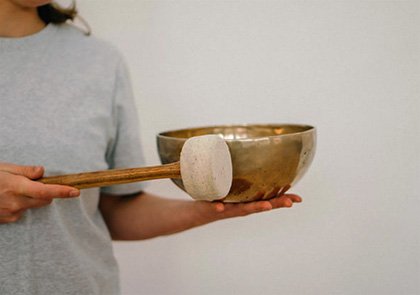
Check out our hand curates playlists for Yoga, Meditation, and relaxation music:
Common misconceptions about music rights
Most wellness professionals get music licensing completely wrong. The biggest misconception? That personal streaming subscriptions cover commercial use. Spotify, Apple Music, and Pandora all explicitly state in their terms that they’re for “personal, non-commercial use” only.
Another myth is that playing music gives artists “free marketing.” While some independent artists might appreciate exposure, most musicians depend on royalties and licensing fees to make a living. Streaming royalties are “abysmal” according to independent artist Egeman Sanli – so that “exposure” argument doesn’t hold water.
Yoga teachers often think they’re exempt because:
- They already pay for a streaming service
- They teach small classes
- They don’t charge much for sessions
- They announce they don’t own the music
- Their venue is small or temporary
None of these excuses matter legally. Even teaching for free in a public park still constitutes a public performance requiring proper licensing.
Recording classes with music creates even more complex issues. As entertainment law expert Harold Papineau explains, “You not only have a public performance issue, but also have a synchronization issue.” Synchronization rights cover music used in video content – that’s a completely separate permission you need to secure.
Understanding these distinctions means you can create amazing atmospheres for your wellness sessions without worrying about legal problems lurking in the background.
Use Case Scenarios for Relaxation Music
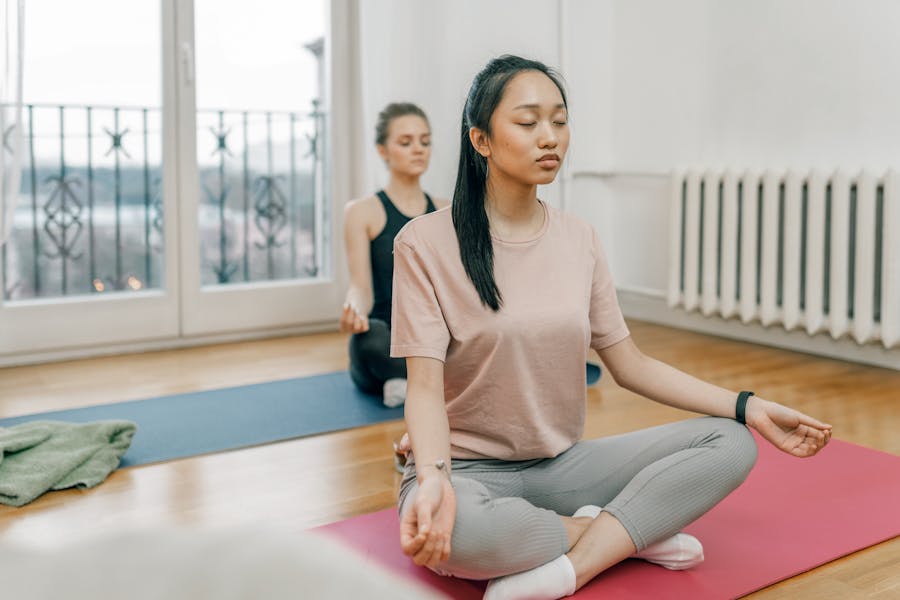
Different wellness settings have different music needs – and different legal requirements. Whether you’re teaching in a physical studio or creating content for mobile apps, understanding these distinctions helps you choose the right approach for your situation.
Yoga instructors in physical studios
Physical studios need a public performance license to legally play music during classes. The music selection should match what you’re trying to achieve – soft instrumental tracks work perfectly for restorative sessions, while more rhythmic compositions help maintain energy during vinyasa flows. Most instructors end up creating specific playlists for different class types, and honestly, that’s the smart approach.
For Savasana specifically, teachers often choose ambient tracks that “evoke deep emotion” while students are in that deeply relaxed state. There’s actually science behind this – research shows that certain musical styles, like sitar music, uniquely lower cortisol levels in listeners’ blood, making them ideal for relaxation-focused practices.
Online yoga and meditation classes
Digital instructors face a more complex licensing situation than their studio counterparts. When you’re streaming or recording classes with music, you need both public performance and synchronization licenses – that’s two different permissions for the same content.
Specialized platforms like YogiTunes offer fully licensed music specifically designed for “background music for videos uploaded to the internet” including YouTube, Facebook, Vimeo, and Zoom. This can save you a lot of headaches.
Online instructors should consider:
- Music that actually sounds good through digital devices and compression
- Tracks that won’t trigger Content ID systems on platforms like YouTube
- Specialized wellness music platforms that handle the copyright mess for you
- Different licensing requirements for live versus recorded content
Wellness apps and mobile platforms
Mobile wellness apps are getting more sophisticated with their music integration. Many now embed binaural beats and isochronic tones into playlists to “influence and entrain brain wave patterns, helping decrease stress and anxiety.” Pretty clever, right?
App developers must secure proper licensing for all their musical content – standard streaming services explicitly prohibit commercial use. Many wellness apps partner with specialized music providers who create tracks specifically for meditation and yoga, often incorporating nature sounds that research shows provide “calming physiological effects.”
Corporate wellness programs
Companies are increasingly using music as a therapeutic tool in workplace wellness initiatives. Studies show that “listening to music can help reduce levels of the stress hormone cortisol, as well as lower blood pressure and heart rate.” Some corporate programs include guided music therapy sessions or provide curated playlists for employee breaks.
Given that work-related stress contributes to approximately 95% of all disease-related ailments, music offers a cost-effective wellness intervention. Companies implementing music wellness strategies report benefits including “decreased turnover, reduced sick days, and improved employee moods.”
Retreats and outdoor sessions
Outdoor yoga retreats present unique music challenges. Your playlists need to work alongside natural ambient sounds – or sometimes compete with them. As one expert puts it, “a yoga retreat playlist is an essential tool for creating the perfect atmosphere during your practice.”
Retreat organizers typically create extended playlists featuring nature-inspired tracks to complement outdoor settings. Some even use specialized frequencies aligned with specific chakras, such as the 417 Hz frequency which “is thought to alleviate tension and stress,” potentially enhancing the physical experience for participants.
The key with any of these scenarios is understanding what licenses you need and making sure your music actually serves the experience you’re trying to create.
Types of Licenses You May Need
Music licensing for yoga and meditation might seem complicated, but once you understand the basics, it’s actually pretty straightforward. Here’s what you need to know about the different licenses based on how you plan to use music in your wellness business.
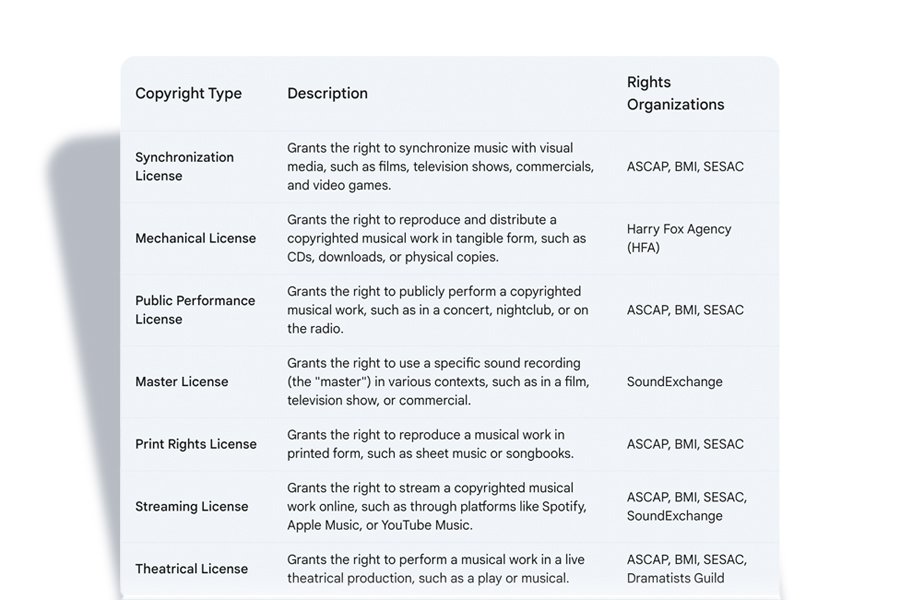
Public performance license
Anytime you play music where people gather beyond your immediate family, you’re giving a public performance that requires licensing. Yes, even in that cozy 10-person studio or the park where you teach outdoor classes.
You’ll need to get licenses from Performing Rights Organizations (PROs). The three major ones in the US are:
- American Society of Composers, Authors and Publishers (ASCAP)
- Broadcast Music Inc. (BMI)
- Society of European Stage Authors and Composers (SESAC)
Here’s the thing – each PRO represents different artists and publishers, so technically you’d need licenses from all three to cover your bases completely. The good news is ASCAP offers pretty reasonable annual licenses based on your business size, starting at less than $1 per day.
Synchronization (sync) license
This license allows you to pair copyrighted music with visual content.
Sync licenses spell out the specifics:
- Where you can distribute the content (territory)
- How long the license lasts (duration)
- Exactly how you can use it (type of use)
- Whether it’s exclusive to you or not
Mechanical license for downloads
If you’re selling downloadable guided meditations with background music or offering recorded classes for purchase, you’ll need mechanical licensing. This covers distributing copyrighted music through physical products like CDs or digital downloads.
You can get mechanical licenses through the publishers who control the work, sites like Songfile and Easy Song, or the Harry Fox Agency in the US.
Streaming and social media use
They explicitly state they’re for “personal, non-commercial use” only.
Streaming classes on YouTube or Instagram means you need both public performance AND synchronization licenses. Looking for our meditation music hand curated playlist can save you the licensing headaches while giving you perfect background tracks for your sessions.
When royalty-free music is enough
Pay once, use it as much as you want – no ongoing costs regardless of how much you profit from using it.
This typically covers:
- Background music for videos
- Monetizing your content
- Using tracks in apps (as long as voice-over covers at least 1/3 of the music)
- Creating products like guided meditations (with substantial voice-over)
Important note: “Royalty-free” doesn’t mean completely free – it means you pay once instead of ongoing royalties. Some restrictions still apply, mainly around selling the music as standalone audio or distributing it without adding your own creative content.
Choosing the Right Relaxation Music
Music selection for wellness sessions goes way beyond just avoiding copyright issues – though that’s obviously important. The wrong track can completely derail your students’ focus, while the perfect soundtrack creates those magical moments that keep people coming back to your classes.
Music selection is deeply personal – what resonates with your teaching style will create the most authentic experience for your students. The key is finding tracks that enhance your classes without becoming the main event.
Match music to session type (Yin, Vinyasa, Meditation)
Different yoga styles need completely different musical approaches. It’s really about understanding what each practice is trying to achieve:
Yin/Restorative: Think gentle, ambient tracks that create space for deep relaxation. Soft instrumental pieces or nature sounds work perfectly when students are holding poses for several minutes. You want music that supports the stillness, not fights it.
Vinyasa/Ashtanga: These classes need rhythmic music with steady beats that can match the flow of movement. Upbeat world music or tribal rhythms help maintain that energetic synchronization between breath and motion – students actually move better when the music supports their rhythm.
Meditation: Minimal compositions work best here. Ambient soundscapes without dramatic shifts let students go inward without musical distractions pulling them back out.
Hatha: This is where you find the middle ground – balanced compositions that are neither too energetic nor too subdued. Classical music or gentle folk tunes often hit that sweet spot.
Instrumental vs. vocal tracks
Here’s what I’ve learned from years of watching how students respond to different music types: instrumental tracks generally cause fewer distractions. Students can focus on their practice and actually hear your instructions clearly. Vocals can pull attention away from breath awareness and internal sensations.
That said, some practitioners swear by meaningful lyrics during heart-opening sequences or when they’re working with specific themes. It’s really about knowing your students and what resonates with your teaching style.
Looping and duration considerations
Make sure your playlist actually matches your class length – nothing kills the vibe like having to scramble for more music mid-class. Many specialized yoga tracks are surprisingly short, like 2-3 minutes, which means you’ll need to loop them for longer poses.
Test your transitions before class. Jarring shifts between songs can completely disrupt the energy you’ve spent 20 minutes building. And remember – your music should complement your voice, not compete with it.
Check out our hand curates playlists for Yoga, Meditation, and relaxation music:
Quick Comparison Table of Licensing Needs
The licensing landscape gets confusing fast when you’re trying to figure out what you actually need for different teaching situations. Let’s break down the key distinctions so you can stop second-guessing yourself.
In-studio vs. online use
Physical studios need public performance licenses from organizations like ASCAP, BMI, or SESAC – that’s it for in-person classes. Online classes are a different beast entirely. You need both public performance AND synchronization licenses because you’re pairing music with visual content.
Here’s where a lot of studio owners get tripped up – they assume their physical space license covers their digital content too. It doesn’t. Stream your in-person playlist directly to your online audience and you’re creating a legal liability that could result in copyright claims or financial penalties.
Live vs. recorded sessions
Live sessions keep things simple – you just need public performance rights. Recorded sessions? That’s where it gets complicated. You need both performance AND synchronization licenses because recorded content can be replayed indefinitely, unlike one-time live events.
Selling downloadable recorded sessions with music adds yet another layer – mechanical licenses. Now you’re looking at a three-tiered licensing requirement that can get expensive quickly.
Free vs. paid music sources
“Free” music doesn’t always mean “free to use commercially” – a distinction that catches many instructors off guard. Here’s the reality:
| Source Type | Commercial Use Permitted? | Additional Licenses Needed |
|---|---|---|
| Personal streaming (Spotify, Apple) | No | Public/sync licenses required |
| Royalty-free platforms | Yes (with limitations) | None (within usage terms) |
| Public domain | Yes | None |
| Creative Commons | Sometimes | Depends on specific license |
License type by platform (YouTube, apps, etc.)
Each platform has its own quirks when it comes to music licensing:
- YouTube: Requires sync licenses; will mute or demonetize videos with unlicensed music
- Instagram/Facebook: Needs sync licenses; may remove content that triggers copyright detection
- Mobile apps: Require both sync and mechanical licenses for downloadable content
- Zoom classes: Still considered public performance despite feeling “private”
Getting properly licensed relaxation background music for commercial use saves you headaches down the road. Specialized services offering royalty-free music yoga content provide the safest option for wellness professionals who want legal clarity without the complexity.
Creating the Perfect Atmosphere Without Legal Headaches
Here’s what matters most: personal streaming subscriptions like Spotify or Apple Music were never designed for commercial use, no matter how small your classes might be. Investing in proper licensing isn’t just about avoiding legal trouble – it’s about respecting the artists who create those beautiful tracks that make your classes memorable.
The licensing landscape breaks down pretty simply:
- Physical studios need public performance licenses
- Online classes require both public performance and sync rights
- Recorded content with downloads needs mechanical licenses too
Explore Trending Tracks & New Releases
Darling I Know
Heartbeat
Shiny Love
Exodus
Not This Time
Leaving The Earth
True Promise
Day To Remember
Heading Back Home
Little Change
Made of Wood
One More Chance

Specialized platforms offering royalty-free music designed specifically for wellness practices solve most of these headaches for you. These services handle the licensing complexity while giving you music that actually works for different practice styles.
Think about it this way – your music selection has a huge impact on your students’ experience. The right tracks can deepen relaxation, enhance focus, and create those transformative moments that keep people coming back to your classes.
Proper music licensing is really just a small investment in your professional practice. Sure, it’s another business expense, but it eliminates significant legal risks while showing you’re committed to running an ethical business.
Whether you’re teaching gentle yin classes, high-energy vinyasa flows, or deep meditation sessions, you can absolutely find legally compliant music that matches your unique style. Once you understand the licensing requirements and explore specialized royalty-free options, you can create that perfect atmosphere for your students while having complete peace of mind about copyright compliance.
The music is out there – you just need to know where to look for it.
FAQs
Q1. What type of music is best for yoga and meditation sessions?
Instrumental music, nature sounds, or ambient tracks are generally preferred for yoga and meditation. These types of music can create a soothing atmosphere without being distracting. It’s best to avoid music with lyrics or strong beats, as they can pull attention away from the practice.
Q2. Do I need a license to play music in my yoga classes?
Yes, you need a license to play music in your yoga classes, especially if you’re charging for the sessions. This is considered commercial use and requires proper licensing to avoid copyright infringement. The type of license needed may vary depending on whether you’re teaching in-person or online.
Q3. Can I use my personal streaming service for background music in commercial yoga sessions?
No, personal streaming services like Spotify or Apple Music explicitly prohibit commercial use in their terms and conditions. Using these services for yoga classes where people pay to attend is a violation of copyright law and can lead to legal issues.
Q4. What’s the difference between royalty-free and copyright-free music?
Royalty-free music means you pay a one-time fee to use the music without ongoing royalties, but it’s not necessarily free to use. Copyright-free music, on the other hand, is in the public domain and can be used without any licensing fees. However, truly copyright-free music is limited and may not always suit modern yoga practices.
Q5. How do I choose the right music for different types of yoga classes?
The choice of music should match the energy and style of your yoga class. For example, use gentle, ambient tracks for Yin or restorative yoga, more rhythmic music with steady beats for Vinyasa flows, and minimal compositions for meditation sessions. Always ensure the music complements your voice and doesn’t overpower your instructions.