Beyond the Brushstroke: A Creator’s Guide to Popular and Underground Art Movements & Styles
From Impressionism’s sun-drenched fields to Vaporwave’s digital nostalgia – the definitive guide for creatives, musicians, and curious minds who want to understand visual art history and its deep sonic connections.
Art is not made in a vacuum. Every stroke of a brush, every chiseled stone, every splatter of paint on a canvas carries the weight of history – the anxieties of an era, the hope of a generation, the rebellion of a misunderstood genius. From the sun-drenched fields captured by Monet to the anarchic happenings staged by Fluxus artists in downtown New York lofts, art has always been a living, breathing response to the world around it.
At its core, an art movement is a tendency or style in the visual arts characterized by a shared philosophy, aesthetic approach, geographic origin, or time period – typically pursued by a group of artists working in conscious dialogue with one another. These movements erupt from cultural pressure points: wars, revolutions, technological upheavals, and social transformations that demand new ways of seeing.
This guide is your invitation into that world. Whether you’re drawn to the crowd-pleasing giants of art history or hungry for the underground movements that never quite made it into your textbook, we’ve mapped the full spectrum. And because great art and great music share the same heartbeat, we close by drawing the sonic lines between visual movements and their musical counterparts.
📋 Table of Contents
- Navigating the Spectrum: Popular vs. Indie Art Movements
- Part 1: Popular Art Movements that Shaped the World
- Part 2: Indie & Niche Movements — The Underground & Avant-Garde
- Resonance: When Visual Art Meets Sound
- Art Movements Timeline
- Glossary: Key Terms Every Art Enthusiast Should Know
- Conclusion
- Further Reading & Resources
Navigating the Spectrum: Defining ‘Popular’ vs. ‘Indie’ Art Movements
Before we dive into individual movements, it’s worth establishing a framework – because not all art movements are created equal in terms of cultural reach, institutional backing, or name recognition.
Movements that have cemented themselves in mainstream cultural consciousness. They are:
- Widely taught in standard art history curricula
- Represented in the world’s major museum collections
- Recognized by casual audiences, not just specialists
- Supported by significant auction market value
- The subject of major retrospectives and documentaries
Think: The Renaissance, Impressionism, Surrealism, Pop Art, Abstract Expressionism.
Movements that operated outside the mainstream. They may be:
- Short-lived or geographically isolated
- Deliberately anti-commercial, rejecting gallery systems
- So radical they retained “cult classic” status
- Known primarily to specialists and serious enthusiasts
- Highly influential far beyond their public recognition
Think: Dada, Fluxus, Neo-Concretism, Kinetic Art, Vaporwave.
Looking for a short summary of the Art Movements Guide?
Download the Art Movements Summary (PDF) →
Popular Art Movements that Shaped the World
The Renaissance (c. 1300s–1600)
Historical Context & Philosophy
The word Renaissance is French for “rebirth,” and it perfectly names what happened when Italian artists and intellectuals of the 14th through 16th centuries rediscovered the legacy of ancient Greece and Rome. This awakening began in the city-states of Florence, Venice, and Rome, fueled by the wealth of patron families like the Medici.
Its philosophical backbone was Humanism – a shift from the medieval God-centered worldview toward a renewed celebration of human dignity, reason, and the beauty of the observable natural world. Renaissance artists studied anatomy with scientific rigor, applied linear perspective to create convincing spatial depth, and depicted human emotion with unprecedented psychological complexity.
Key Characteristics & Techniques
- Linear perspective – mathematically accurate recession into pictorial depth
- Naturalism and anatomical accuracy – figures rendered with convincing physical weight
- Humanism in subject matter – mythological and secular subjects alongside religious themes
- Chiaroscuro – dramatic use of light and shadow to model three-dimensional form
- Balanced, harmonious compositions – geometric order and deliberate symmetry
Prominent Artists & Masterpieces
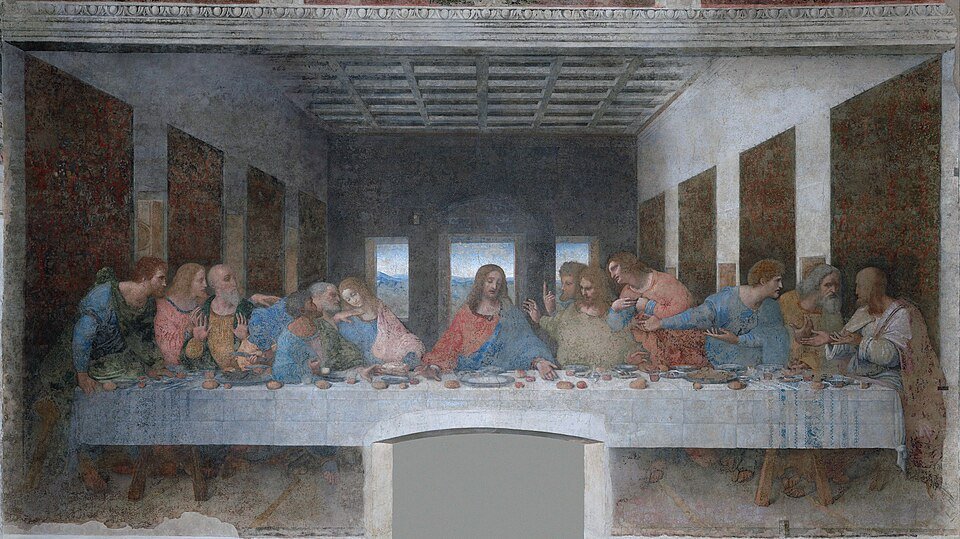
Leonardo da Vinci – The Last Supper (c. 1495–98); Mona Lisa (c. 1503–19)
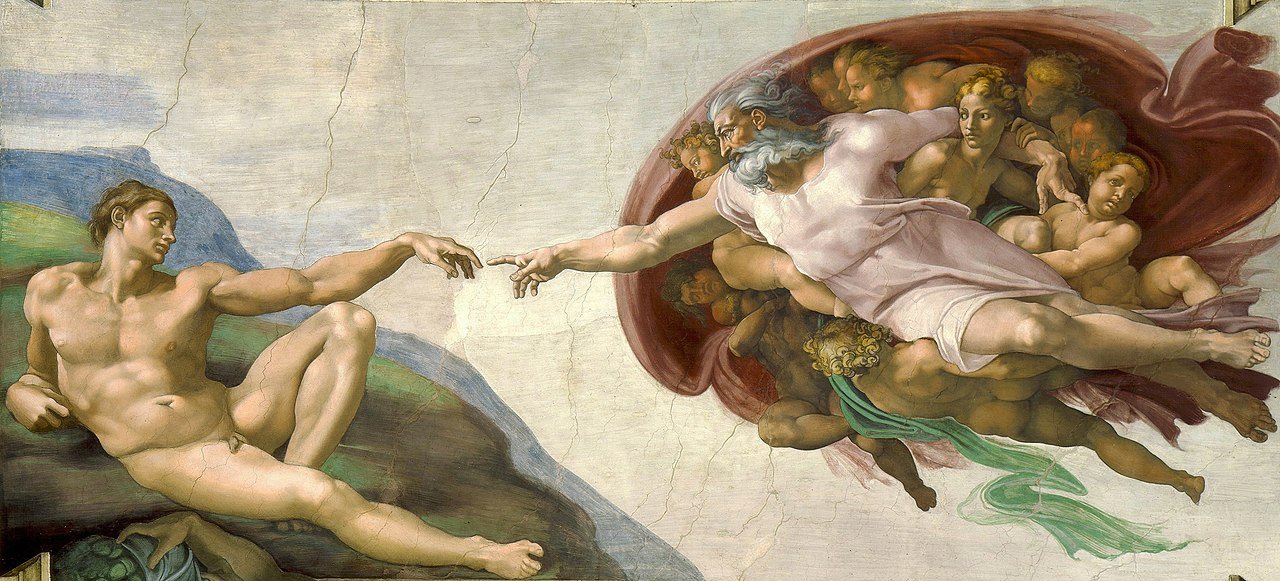
Michelangelo – The Creation of Adam (Sistine Chapel, 1508–12); David (sculpture, 1501–04)
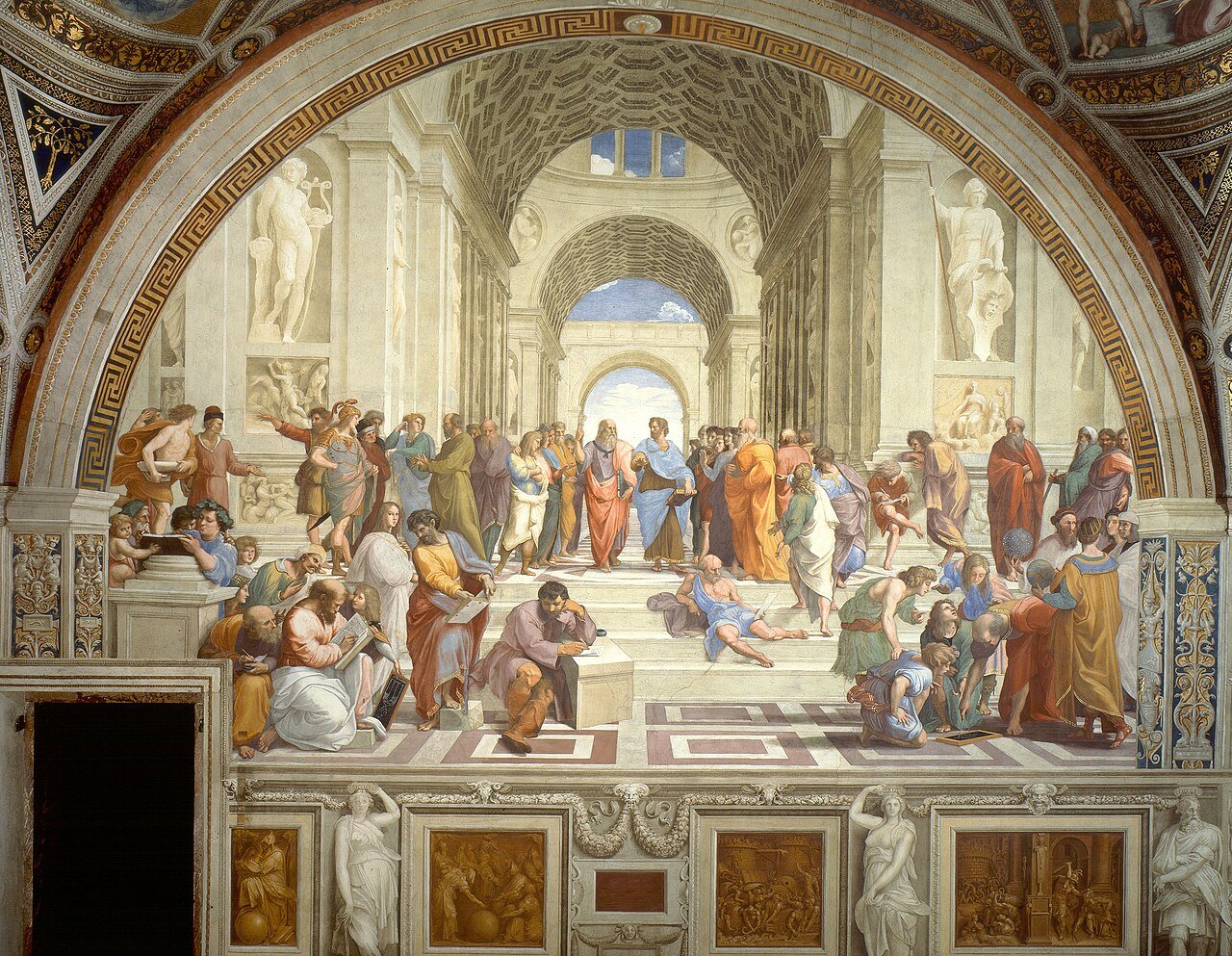
Raphael – The School of Athens (1509–11)
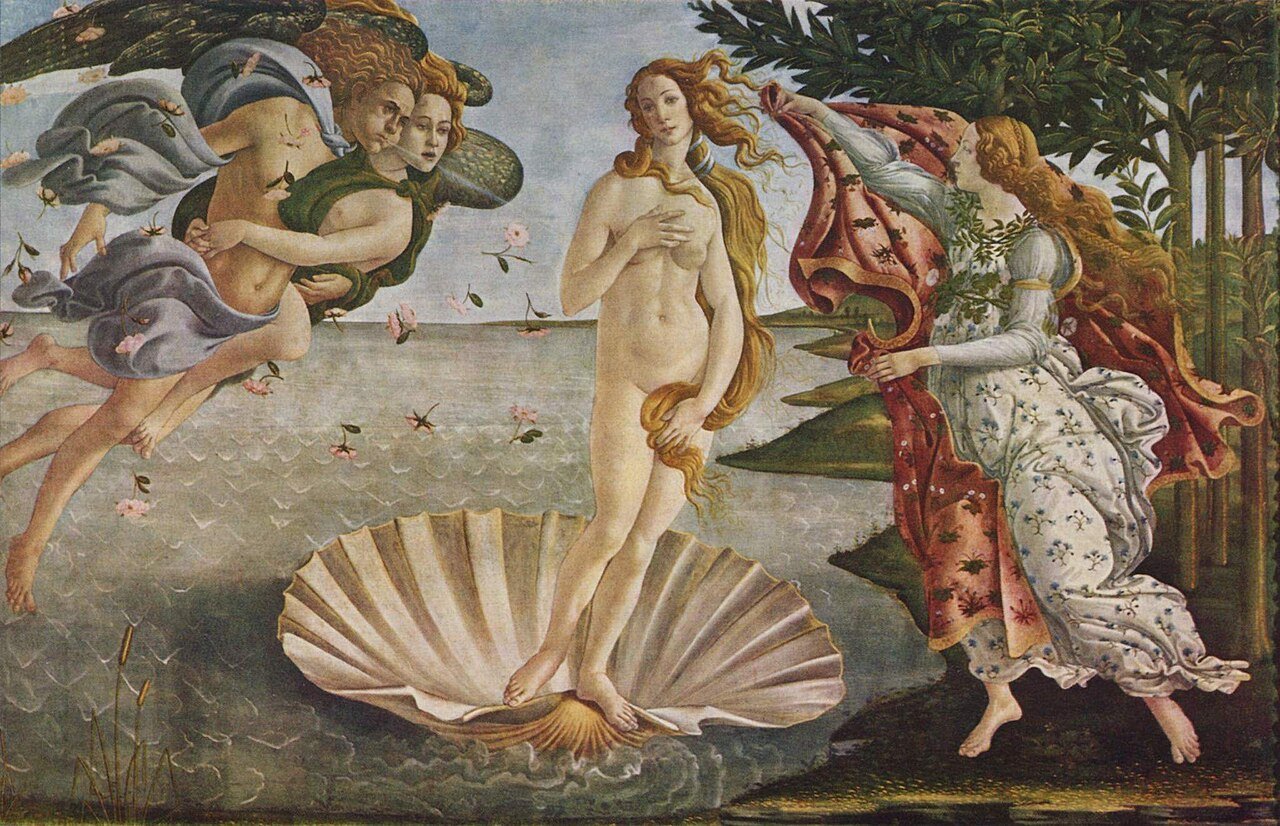
Sandro Botticelli – The Birth of Venus (c. 1484–86)
Impressionism (c. 1860s–1880s)
Historical Context & Philosophy
Impressionism emerged in Paris in the 1860s, born from collective frustration with the rigid conventions of the French Académie des Beaux-Arts. A group of painters – Claude Monet, Pierre-Auguste Renoir, Edgar Degas, and others – began painting outdoors (en plein air), observing how light transformed color and form in real time.
The movement’s name came from a critic’s mocking review of Monet’s 1872 painting Impression, Sunrise – and the artists embraced the insult as a badge of honor. The philosophical foundation was radical: reality is not fixed. What we perceive is constantly shifting, colored by time of day, weather, and subjective experience.
Key Characteristics & Techniques
- Visible, loose brushstrokes that prioritize movement over blending
- Emphasis on natural, outdoor light and its effect on color
- Everyday modern subjects – parks, cafés, dancers, water – rather than mythological scenes
- Colors used directly, often without mixing, to create vibrancy and immediacy
- Unfinished quality that conveys spontaneity and life
Prominent Artists & Masterpieces
Claude Monet – Water Lilies series (1896–1926); Impression, Sunrise (1872)
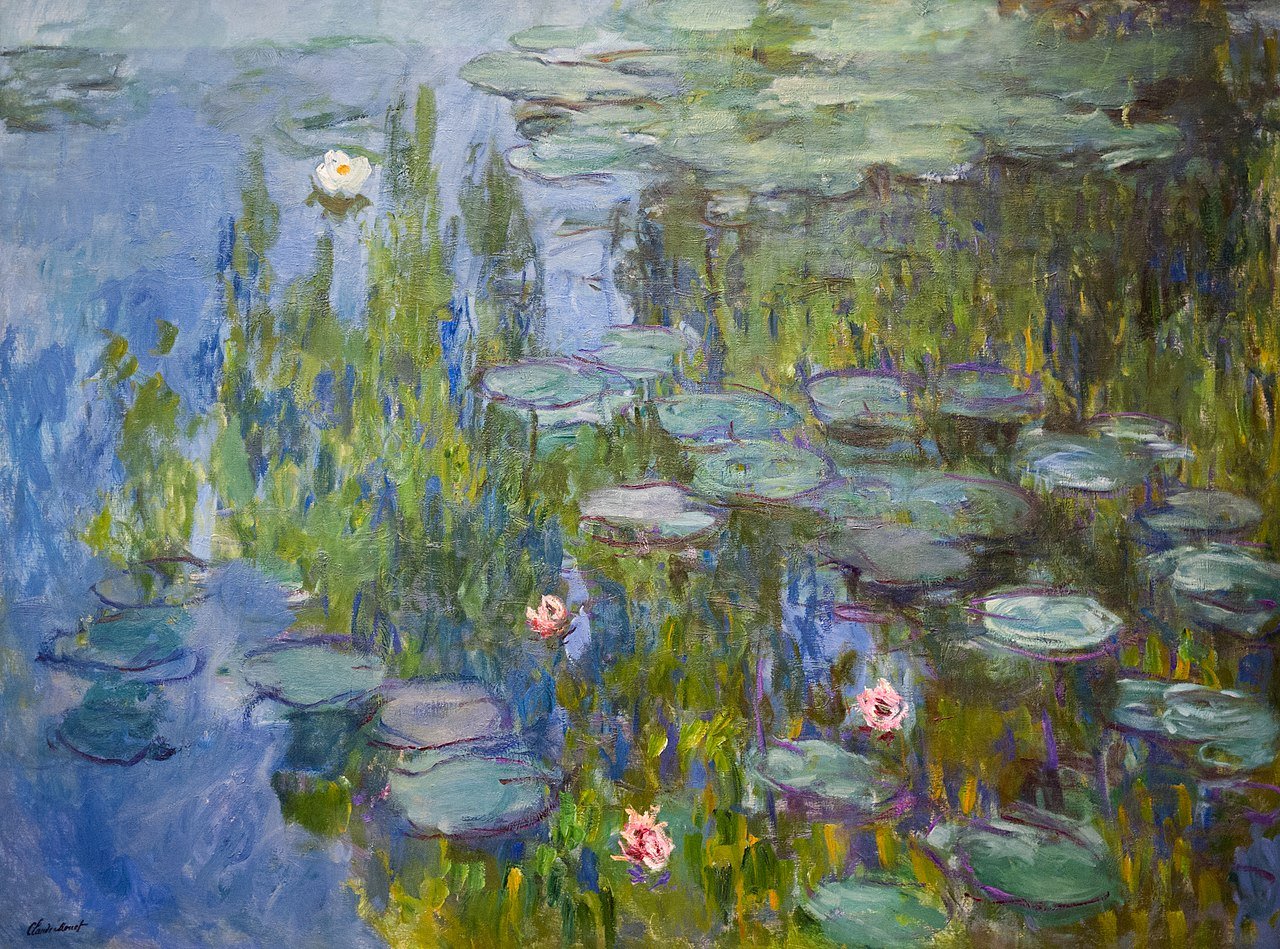
Claude Monet, Water Lilies, 1906, Oil on canvas, The Art Institute of Chicago. Source: Wikimedia Commons (Public Domain)
Pierre-Auguste Renoir – Luncheon of the Boating Party (1881)
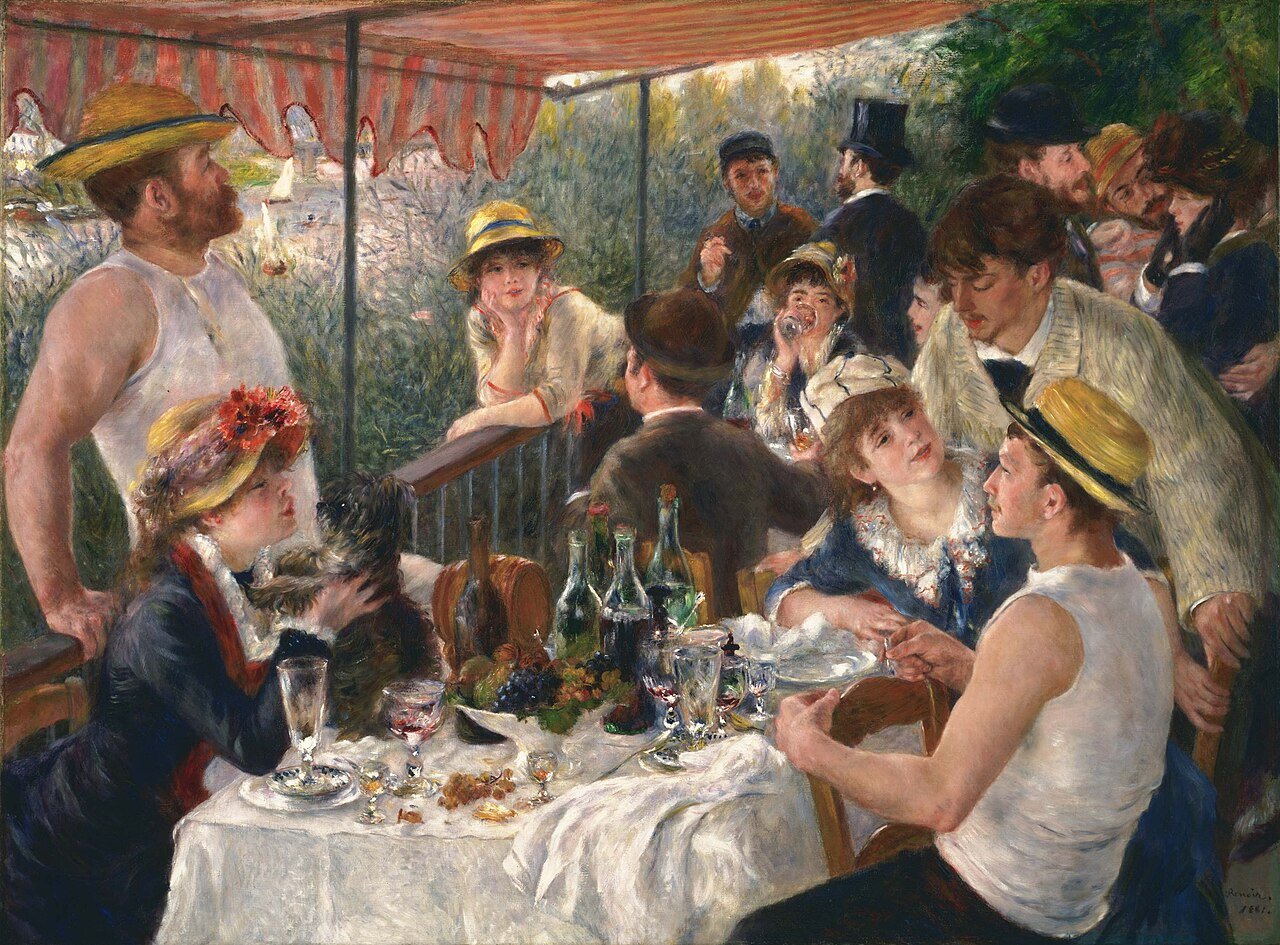
Pierre-Auguste Renoir, Luncheon of the Boating Party, 1881, Oil on canvas, The Phillips Collection. Source: Wikimedia Commons (Public Domain)
Edgar Degas – The Dance Class (1874)
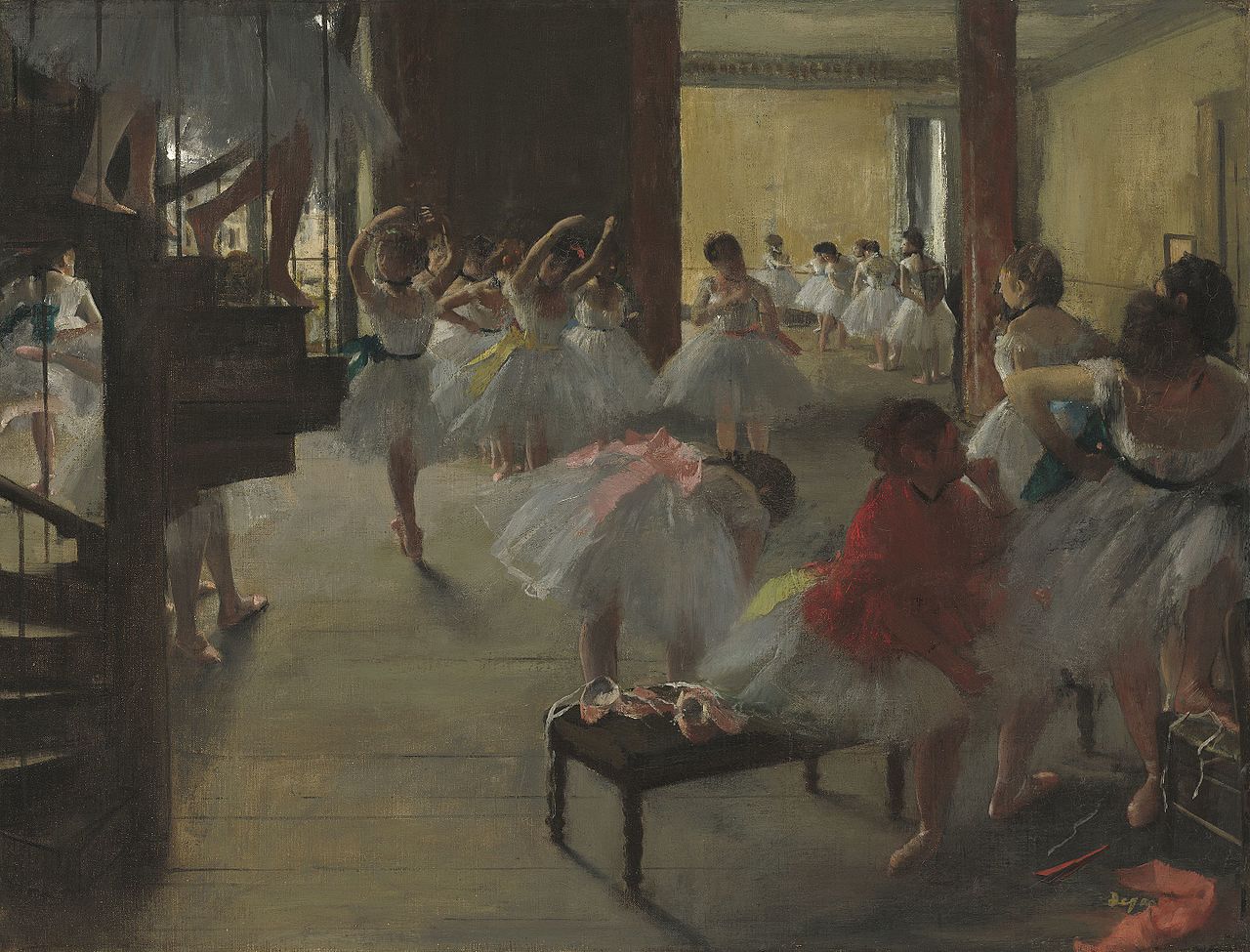
Edgar Degas, The Dance Class, 1874, Oil on canvas, The Metropolitan Museum of Art. Source: Wikimedia Commons (Public Domain)
Berthe Morisot – The Cradle (1872)
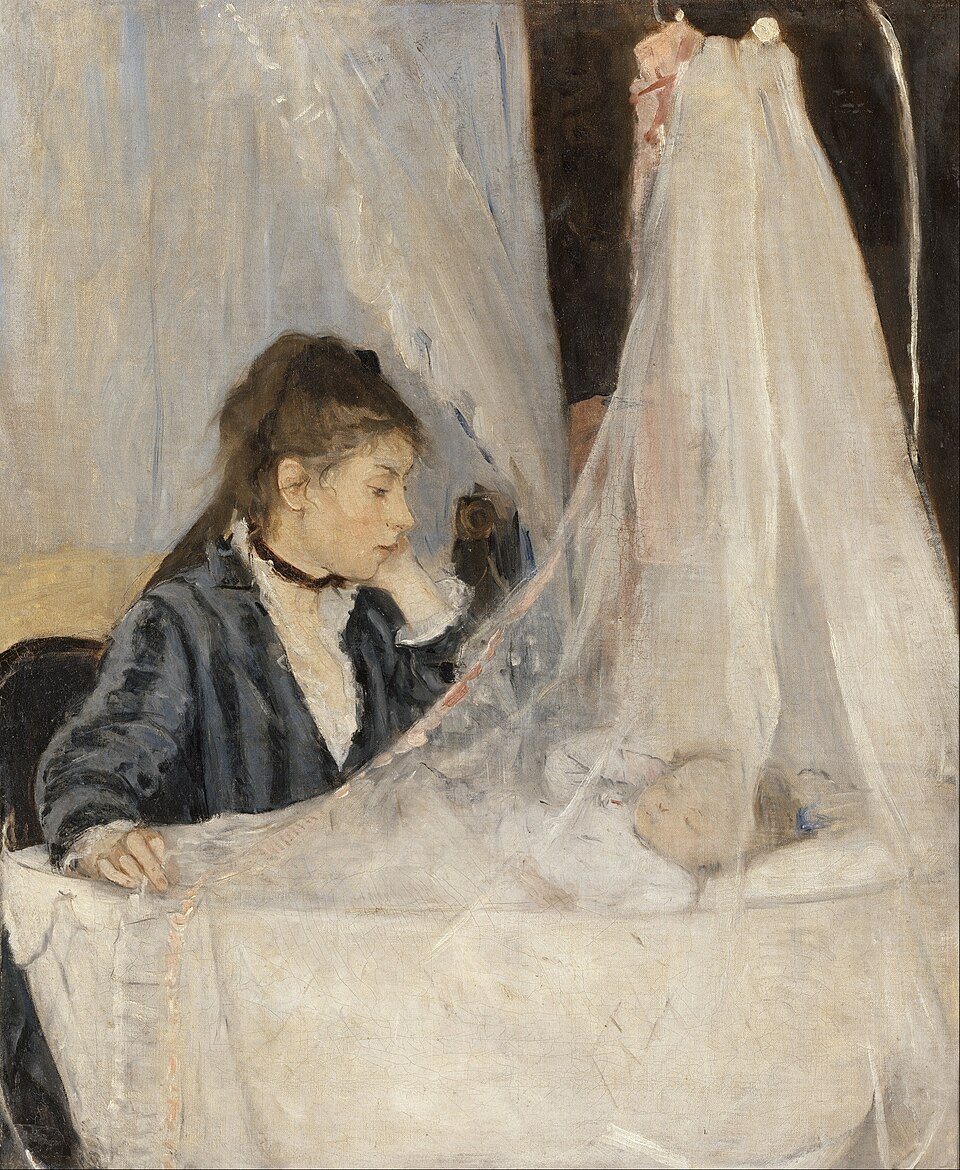
Berthe Morisot, The Cradle, 1872, Oil on canvas, Musée d’Orsay. Source: Wikimedia Commons (Public Domain)
Cubism (c. 1907–1920s)
Historical Context & Philosophy
Pablo Picasso and Georges Braque co-founded Cubism in Paris around 1907. The early 20th century was a period of radical intellectual upheaval – Einstein had published his theory of special relativity, challenging fixed notions of time and space, and Freud was mapping the labyrinthine complexity of the human mind. Cubism was painting’s answer to these revelations.
The guiding principle: a single perspective is a lie. We perceive the world not from one frozen vantage point but from a complex accumulation of viewpoints over time. Cubist artists dissected their subjects and reassembled them on the canvas from multiple angles simultaneously.
Key Characteristics & Techniques
- Geometric, fragmented forms – objects reduced to cubes, spheres, cylinders
- Multiple simultaneous viewpoints on a single canvas
- Flattened picture plane – depth and perspective deliberately undermined
- Monochromatic or muted color palette (especially in Analytic Cubism, 1908–1912)
- Collage elements in Synthetic Cubism (post-1912) – newspaper clippings, wallpaper, found materials
Prominent Artists & Masterpieces
- Pablo Picasso – Les Demoiselles d’Avignon (1907); Guernica (1937)
- Georges Braque – Houses at l’Estaque (1908)
- Juan Gris – Portrait of Pablo Picasso (1912)
Surrealism (c. 1924–1960s)
Historical Context & Philosophy
Surrealism was officially launched in Paris in 1924 when poet and theorist André Breton published the Surrealist Manifesto, channeling Sigmund Freud’s psychoanalytic theory into a full artistic program. It grew directly out of the ashes of Dada – but where Dada was pure destruction, Surrealism sought to build something: a new reality accessible through dreams and the subconscious.
The Surrealists believed that modern rationalism – the same logic that had engineered the trenches of the Somme – was the true enemy of human freedom. They practiced techniques like automatism (drawing without conscious control) to bypass the rational mind and tap directly into the territory of dreams.
Key Characteristics & Techniques
- Dreamlike, hallucinatory imagery that defies rational logic
- Unexpected, unsettling juxtapositions of ordinary objects in strange contexts
- Hyper-realistic rendering used to make impossible scenes feel disturbingly plausible
- Distorted figures and symbolic imagery – melting clocks, floating eyes, metamorphic bodies
- Automatism – spontaneous, unplanned creative processes to access the unconscious
Prominent Artists & Masterpieces
- Salvador Dalí – The Persistence of Memory (1931)
- René Magritte – The Treachery of Images (1929); The Son of Man (1964)
- Max Ernst – The Elephant Celebes (1921)
- Frida Kahlo – The Two Fridas (1939)
Abstract Expressionism (c. 1940s–1950s)
Historical Context & Philosophy
Abstract Expressionism was the first major American-born art movement, emerging in New York in the 1940s in the shadow of World War II and the atomic age. Combined with the existentialist philosophy circulating in New York intellectual circles, this created a combustive new approach: art as pure gesture, as a record of the artist’s physical and psychological confrontation with the canvas.
The movement famously split into two camps: the Action Painters (like Jackson Pollock, who dripped, poured, and hurled paint onto canvases on the floor) and the Color Field painters (like Mark Rothko, who used large luminous fields of color to evoke the “sublime”).
Key Characteristics & Techniques
- Non-representational abstraction – no recognizable subjects or narratives
- Gestural mark-making – the physical act of painting as the subject itself
- Large scale – canvases designed to envelop and overwhelm the viewer
- Emphasis on process over finished, polished product
- Emotional rawness – art as psychological self-exposure, not aesthetic pleasure
Prominent Artists & Masterpieces
- Jackson Pollock – No. 31 (1950); Autumn Rhythm (1950)
- Mark Rothko – No. 61 (Rust and Blue) (1953)
- Willem de Kooning – Woman I (1950–52)
- Lee Krasner – The Seasons (1957)
Pop Art (c. 1950s–1970s)
Historical Context & Philosophy
Pop Art exploded simultaneously in Britain and the United States in the mid-1950s and early 1960s, at the precise moment when consumer culture, television, cinema, and advertising were transforming daily life. Where Abstract Expressionism looked inward with anguished seriousness, Pop Art looked outward – at Campbell’s soup cans, Hollywood celebrities, comic strips, and supermarket shelves – with a deadpan, knowing grin.
Artists like Andy Warhol used the language of mechanical reproduction – silkscreen printing, repetition, mass production – to make art that both mirrored and satirized the culture of consumerism it depicted. The movement democratized art, blurring the line between “high” and “low” culture in ways that still reverberate today.
Key Characteristics & Techniques
- Bold, flat colors inspired by commercial printing and advertising
- Recognizable mass-culture imagery – brand logos, celebrities, comic strips
- Mechanical reproduction techniques – silkscreen printing, photography
- Irony, wit, and ambiguity – a refusal to declare itself purely celebratory or critical
- Large scale – elevating the disposable to monumental proportions
Prominent Artists & Masterpieces
- Andy Warhol – Campbell’s Soup Cans (1962); Marilyn Diptych (1962)
- Roy Lichtenstein – Whaam! (1963); Drowning Girl (1963)
- Richard Hamilton – Just what is it that makes today’s homes so different, so appealing? (1956)
- Jasper Johns – Flag (1954–55)
Bauhaus (c. 1919–1933)
Historical Context & Philosophy
The Bauhaus school was founded in Weimar, Germany in 1919 by architect Walter Gropius, in the turbulent aftermath of World War I. The founding premise was radical: the artificial separation between fine art, craft, and industrial design was a social and aesthetic failure. Art should serve real life; beauty and utility should be inseparable.
The school moved to Dessau and later Berlin before being forced to close by the Nazis in 1933 – but not before its graduates and faculty (including Paul Klee, Wassily Kandinsky, and László Moholy-Nagy) had seeded a design revolution that reshaped architecture, typography, industrial design, and visual communication for the entire 20th century and beyond.
Key Characteristics & Techniques
- Integration of fine art and functional design – no hierarchy between disciplines
- Geometric abstraction – primary shapes, primary colors, essential forms
- Typography and graphic design elevated to fine art status
- Industrial materials and production methods embraced, not rejected
- Total design philosophy – from architecture to teaspoons, everything designed as a unified whole
Prominent Artists & Masterpieces
- Walter Gropius – Bauhaus Dessau building (1926)
- Wassily Kandinsky – Yellow-Red-Blue (1925)
- Paul Klee – Twittering Machine (1922)
- László Moholy-Nagy – Light-Space Modulator (kinetic sculpture, 1930)
Indie & Niche Art Movements – The Underground & The Avant-Garde
Dada (c. 1916–1924)
Historical Context & Philosophy
Dada was born in Zurich, Switzerland in 1916, in the Cabaret Voltaire – a gathering place for war-weary artists and intellectuals who had sought refuge in neutral Switzerland from the European slaughter. Founded by Hugo Ball, Emmy Hennings, Tristan Tzara, and Jean Arp, Dada was less a style than a declaration of war on art itself.
The name “Dada” – allegedly selected at random from a dictionary, meaning “hobbyhorse” – perfectly captured the movement’s absurdist spirit. Dada spread rapidly to Berlin, Cologne, New York, and Paris, influencing Surrealism, Fluxus, Punk, and Conceptual Art for decades to come.
Key Characteristics & Techniques
- Nonsense, absurdity, and irrationality as deliberate aesthetic positions
- Readymades – ordinary manufactured objects declared as art (Marcel Duchamp’s Fountain, a urinal)
- Collage and photomontage combining unrelated images to disrupt conventional meaning
- Performance and “sound poetry” – Hugo Ball’s phonetic poems stripped language of rational meaning
- Anti-aesthetic stance – rejecting beauty, craft, and institutional validation
Prominent Artists & Masterpieces
- Marcel Duchamp – Fountain (1917); L.H.O.O.Q. (1919)
- Hannah Höch – Cut with the Kitchen Knife Dada (1919–20)
- Man Ray – The Gift (1921)
- Hugo Ball – sound poetry performances at Cabaret Voltaire (1916)
Fluxus (c. 1960s–1970s)
Historical Context & Philosophy
Fluxus emerged in the early 1960s, organized largely by Lithuanian-American artist George Maciunas, who staged the first Fluxus festival in Wiesbaden, Germany in 1962. Inspired by the radical composition theories of John Cage, Fluxus artists produced “event scores”: simple, often absurd written instructions for performances that anyone could enact.
Fluxus was militantly anti-commercial, and the movement pioneered intermedia (art that crosses between disciplines), helped birth video art through Nam June Paik’s revolutionary TV sculptures, and laid the groundwork for conceptual art and contemporary performance art.
Key Characteristics & Techniques
- Event scores – written instructions for simple, repeatable performances
- Intermedia – deliberate crossing between music, visual art, performance, and poetry
- Anti-commodity stance – works designed to be unrepeatable, unsellable, or absurd
- Everyday actions elevated to art – eating, walking, turning a page
- Video art – pioneered by Nam June Paik’s manipulated TV sets
Prominent Artists & Masterpieces
- Yoko Ono – Grapefruit (event score book, 1964); Cut Piece (performance, 1964)
- Nam June Paik – TV Buddha (1974); Electronic Superhighway (1995)
- George Brecht – Drip Music (event score, 1959)
- Joseph Beuys – I Like America and America Likes Me (performance, 1974)
Neo-Concretism (c. 1959–1961)
Historical Context & Philosophy
Neo-Concretism emerged in Rio de Janeiro, Brazil in 1959, led by artists including Lygia Clark, Hélio Oiticica, and Lygia Pape. Its philosophical statement – the Neo-Concrete Manifesto (1959) by Ferreira Gullar – is one of the most important documents in Latin American art history.
The movement was a direct response to European Concrete Art, which reduced art to pure mathematical logic, objective form, and universalist geometry. The Neo-Concretists argued that colors, forms, and space were not neutral – they belonged to “the living and indeterminate experience of man.” Art should activate the viewer’s entire body, not just their intellect.
Key Characteristics & Techniques
- Participatory objects – works designed to be touched, worn, or activated by the viewer
- Sensory engagement – color and form experienced through the whole body
- Rejection of mathematical rationalism – form as lived experience, not formula
- Wearable art – Lygia Clark’s Bichos (hinged metal sculptures) and Roupa-Corpo-Roupa
- Environmental installations – Hélio Oiticica’s Parangolés (capes to be worn and danced in)
Prominent Artists & Masterpieces
- Lygia Clark – Bichos series (1960–63); Caminhando (1963)
- Hélio Oiticica – Parangolés (1964–79); Tropicália (1967)
- Lygia Pape – Tecelares woodcut series (1955–59)
Kinetic Art (c. 1950s–1970s)
Historical Context & Philosophy
Kinetic Art brought motion into the heart of the visual art experience, drawing on a lineage stretching back to Alexander Calder’s floating mobiles of the 1930s. Its theoretical foundation was solidified with the landmark 1955 exhibition Le Mouvement at Galerie Denise René in Paris, featuring works by Yaacov Agam, Jean Tinguely, and Victor Vasarely.
The movement reflected the post-war fascination with science, technology, and engineering. In an era of rockets, television, and early computers, kinetic artists asked: why should art stand still?
Key Characteristics & Techniques
- Real physical movement – motor-driven, wind-activated, or viewer-activated sculptures
- Op Art / optical illusion – static images that create the perception of movement
- Time as a medium – the work only fully exists through duration
- Mechanical and industrial materials – motors, magnets, reflective surfaces
- Viewer interaction – works that change depending on the viewer’s position or participation
Prominent Artists & Masterpieces
- Alexander Calder – Lobster Trap and Fish Tail (mobile, 1939)
- Jean Tinguely – Homage to New York (self-destroying sculpture, 1960)
- Bridget Riley – Movement in Squares (1961); Blaze (1964)
- Victor Vasarely – Vega-Nor (1969)
Minimalism (c. 1960s–1970s)
Historical Context & Philosophy
Minimalism emerged in New York in the early 1960s as a reaction against the emotional excess of Abstract Expressionism. Key theorists and artists – including Donald Judd, Dan Flavin, and Carl Andre – argued that art should present itself as a literal object in the world, not an illusionistic window into an imagined space.
Judd’s influential 1965 essay “Specific Objects” rejected traditional European notions of painting and sculpture in favor of new three-dimensional works made from industrial materials: steel, aluminum, plexiglass, fluorescent light tubes. The result was art of radical austerity, intellectual clarity, and spatial presence that demanded the viewer engage with it physically.
Key Characteristics & Techniques
- Industrial materials – fabricated steel, aluminum, plexiglass, fluorescent light
- Pure geometric forms – cubes, rectangles, grids, straight lines
- No personal expression or artist’s hand – works often fabricated by technicians
- Site-specificity – the relationship between object and architectural space is central
- Repetition and seriality – identical or near-identical units arranged in sequences
Prominent Artists & Masterpieces
- Donald Judd – Untitled (Stack) (1967)
- Dan Flavin – the nominal three (to William of Ockham) (1963)
- Carl Andre – Equivalent VIII (firebricks, 1966)
- Agnes Martin – Untitled #5 (1994)
Street Art & Graffiti (c. 1970s–present)
Historical Context & Philosophy
Graffiti as a modern art movement emerged on the subway cars and walls of New York City in the early 1970s, pioneered by writers like TAKI 183. What began as tagging evolved into an elaborate visual culture of lettering styles, characters, and murals – and gradually intersected with the fine art world through figures like Jean-Michel Basquiat and Keith Haring in the 1980s.
Contemporary street art – associated with artists like Banksy – operates with a more explicitly political agenda, using public walls as platforms for social commentary. The movement’s core philosophy remains constant: art should not require institutional permission, gallery admission, or economic access. The city is the canvas; the audience is everyone.
Key Characteristics & Techniques
- Public space as medium – walls, trains, bridges, underpasses
- Spray paint, stencils, wheatpaste as primary tools
- Political and social commentary – often confrontational, satirical, or subversive
- Ephemeral nature – works painted over, removed, or destroyed
- Visual accessibility – designed to communicate to a broad, non-specialist public
Prominent Artists & Masterpieces
- Jean-Michel Basquiat – Untitled (Skull) (1981); early SAMO© tags (1977–79)
- Keith Haring – New York City subway chalk drawings (1980–85)
- Banksy – Girl with Balloon (London, 2002); Dismaland (2015)
Vaporwave Art (c. 2010–present)
Historical Context & Philosophy
Vaporwave is perhaps the first art movement born entirely within the internet. Emerging around 2010–2012 from underground online music communities, it merged Windows 95 interfaces, glitchy graphics, Roman busts, Miami Vice pastel palettes, Japanese katakana text, and endless mall corridors into a visual language that felt simultaneously nostalgic and deeply strange.
Vaporwave is not optimistic nostalgia. It is hauntology – the idea that our culture is haunted by futures that never arrived and pasts we’ve misremembered and commodified. The movement is simultaneously a product of consumer culture and a critique of it. As a digital-native movement with no founding manifesto, fixed group of artists, or institutional home, it sits squarely in the underground tradition.
Key Characteristics & Techniques
- Retrofuturistic aesthetic – early computer graphics, CRT monitor aesthetics, VHS distortion
- Pastel and neon color palettes – pinks, purples, teals, often on dark backgrounds
- Classical imagery repurposed – Roman/Greek busts in digital environments
- Japanese text and aesthetics mixed with Western consumer imagery
- Glitch effects, pixel art, and distortion as intentional stylistic tools
Prominent Artists & Masterpieces
- Macintosh Plus / Ramona Xavier – Floral Shoppe album artwork (2011) – the defining visual document of the movement
- Saint Pepsi / Skylar Spence – Hit Vibes artwork (2013)
- Lazerdisc Party – early Tumblr visual work (2010–12)
Resonance: When Visual Art Meets Sound
One of the most revelatory things you can do with art history is listen to it. Visual art movements and music genres don’t just share historical timelines – they share philosophies, emotional temperatures, and structural approaches. They are parallel translations of the same cultural moment into different sensory languages.
Each of these connections points to a sonic world worth exploring. Explore the full collection of mood-curated, royalty-free music at Foximusic’s curated playlists – hand-organized by mood, genre, and use-case for creators, filmmakers, and artists.
| Art Movement | Parallel Music Genre / Vibe | The Connection | Listen on Foximusic |
|---|---|---|---|
| Impressionism | Ambient / Lo-Fi Hip-Hop / Impressionist Classical | Monet’s flickering light and Ravel’s shimmering harmonics emerge from the same source: the idea that the mood of a moment is more truthful than its literal description. Both resist hard edges, both dissolve into atmosphere. | Lo-Fi & Ambient Playlist → |
| Cubism | Jazz / Bebop | Jazz deconstructs melody and harmony the way Cubism deconstructs the figure: fragmenting, recontextualizing, presenting multiple melodic “viewpoints” simultaneously. Thelonious Monk’s angular piano lines are Cubist paintings in sound. | Jazz & Neo-Soul Playlist → |
| Surrealism | Psychedelic Rock / Dark Ambient / Dream Pop | Both access the unconscious through distortion and disorientation – guitar feedback, reversed recordings, and unsettling time signatures mirror the dreamscapes of Dalí and Magritte. The goal in both is to make the impossible feel real. | Psychedelic & Dream Pop Playlist → |
| Abstract Expressionism | Free Jazz / Experimental Electronic | Jackson Pollock’s physical, gestural drip technique is the direct visual equivalent of Ornette Coleman’s free jazz: both abandon predetermined structure in favor of pure spontaneous emotional expression. Rothko’s color fields find their sound in long-form drone and ambient music. | Experimental & Free-Form Playlist → |
| Pop Art | Synth-Pop / Dance / Uptempo Electronic | Pop Art’s embrace of mass culture, bright surfaces, and knowing irony maps perfectly onto synth-pop and dance music – music made about and with the tools of commercial production, simultaneously celebrating and subverting its own medium. | Synth-Pop & Uptempo Electronic Playlist → |
| Dada | Noise Music / Industrial / No-Wave | Dada’s assault on aesthetic beauty and rational meaning is identical to the philosophy of noise music – both use dissonance, chaos, and anti-structure as acts of cultural protest. | Experimental Playlist → |
| Fluxus | Experimental / Avant-Garde / Sound Art | Fluxus and experimental music share the same DNA: John Cage was a direct influence on both movements. Both treat any sound and any action as potentially musical or artistic – the boundary between life and art dissolves entirely. | Avant-Garde → |
| Vaporwave | Vaporwave / Chillwave / Lo-Fi | These are literally the same movement across two mediums – the visual aesthetic and the musical genre emerged simultaneously, each defining the other, both drenched in the same nostalgic, melancholic digital haze. | Vaporwave & Chillwave → |
Explore Trending Tracks & New Releases
Basic Elements
Heartbeat
Here For You
Shiny Love
No Limits
Broken Lights
True Promise
Day To Remember
Heading Back Home
Little Change
Made of Wood
One More Chance

Art Movements Timeline
| Period | Movement | Origin | Key Idea |
|---|---|---|---|
| c. 1300s–1600 | The Renaissance | Italy / Europe | Humanism, perspective, anatomical naturalism |
| c. 1860s–1880s | Impressionism | Paris, France | Light, atmosphere, sensory immediacy |
| c. 1907–1920s | Cubism | Paris, France | Multiple viewpoints, geometric fragmentation |
| c. 1916–1924 | Dada | Zurich / New York | Anti-art, absurdity, anti-war protest |
| c. 1919–1933 | Bauhaus | Germany | Form follows function, art + design unified |
| c. 1924–1960s | Surrealism | Paris, France | Dreams, unconscious, irrational imagery |
| c. 1940s–1950s | Abstract Expressionism | New York, USA | Gestural abstraction, emotional immediacy |
| c. 1950s–1970s | Pop Art | UK / USA | Mass culture, irony, consumer imagery |
| c. 1950s–1970s | Kinetic Art | Europe / Latin America | Motion, optical illusion, time in art |
| c. 1959–1961 | Neo-Concretism | Rio de Janeiro, Brazil | Participatory, sensory, anti-rationalist |
| c. 1960s–1970s | Fluxus | Germany / USA / Japan | Events, anti-commercialism, everyday as art |
| c. 1960s–1970s | Minimalism | New York, USA | Pure form, industrial material, no expression |
| c. 1970s–present | Street Art / Graffiti | New York / Global | Public space, democratic access, political voice |
| c. 2010–present | Vaporwave Art | Internet / Global | Digital nostalgia, hauntology, internet culture |
Glossary: Key Terms Every Art Enthusiast Should Know
A guide of this depth inevitably introduces technical vocabulary. Here is a concise decoder for the most important terms used throughout this article.
A creative technique championed by the Surrealists in which the artist suppresses conscious control and allows the hand to move spontaneously, accessing the unconscious. The musical equivalent is free improvisation.
From the French military term for the forward unit of an army – describes art that is experimentally ahead of its time, pushing beyond the current boundaries of what art is accepted to be.
Italian for “light-dark”; the technique of using strong contrasts between light and shadow to model three-dimensional form on a flat surface. Associated especially with the Renaissance and Baroque.
French for “in open air”; the practice of painting outdoors in direct observation of the landscape, light, and atmosphere. Pioneered by the Impressionists as a rejection of studio-bound academic painting.
A philosophical concept (derived from Derrida, popularized by cultural critic Mark Fisher) describing the condition of being haunted by lost or imagined futures – central to understanding Vaporwave and related aesthetics.
The Renaissance philosophical stance placing human beings, their reason, dignity, and potential at the center of intellectual and artistic concern – a shift away from the medieval God-centered worldview.
Term coined by Fluxus artist Dick Higgins for artworks that exist between established artistic disciplines – not quite music, not quite painting, not quite poetry, but drawing from all of them simultaneously.
A public declaration of an art movement’s principles and intentions. Surrealism’s Manifesto of Surrealism (1924) and Neo-Concretism’s Neo-Concrete Manifesto (1959) are among the most important in art history.
An ordinary manufactured object selected and designated as a work of art by the artist, without significant physical modification. Marcel Duchamp’s Fountain (a commercially manufactured urinal) is the canonical example.
The official annual exhibition of the Académie des Beaux-Arts in Paris, which for centuries served as the principal gateway to public recognition. The Impressionists famously created the Salon des Refusés (1863) after their work was excluded.
Conclusion
Art movements are maps. They chart the emotional, intellectual, and cultural terrain of the humans who made them – and they help us locate ourselves in relation to that history. Whether you find yourself drawn to the sun-soaked optimism of Impressionism, the anarchic energy of Dada, the dreamlike logic of Surrealism, or the internet-haunted melancholy of Vaporwave, each movement is an invitation: to see differently, to feel more precisely, and to understand why the world looked the way it did to the people who lived in it.
The more fluently you can read both, the richer your experience of either becomes. Now go look at something. Then go listen to something. Notice the connection.
Further Reading & Resources
- The Story of Art – E.H. Gombrich
- Ways of Seeing – John Berger
- The Shock of the New – Robert Hughes
- Seven Days in the Art World – Sarah Thornton
Looking for a short summary of the Art Movements Guide?
Download the Art Movements Summary (PDF) →